GREGORY JOHN SCAHILL died 15 July 2022, aged 98.

GREGORY JOHN SCAHILL died 15 July 2022, aged 98.

Greg Scahill was the second oldest of our former Club players, a past President of the Club (1973-1976), a Vice President since 1972, and a Life Member of the Club since 1977.

Greg was a renowned after-dinner speaker who interspersed a breadth of knowledge and wide-ranging interests with an understated, self-deprecating delivery. Audiences were naturally drawn to him especially at SUCC gatherings. He also made the SUCC Veterans’ Reports in the Club’s Annuals required and primary reading.

Details of the Veterans’ seasons were sprinkled with gems.

The ‘double’ for the season (50 runs and 5 wickets) was much sought-after. The ‘junior double’ (10 runs and one wicket), however, was still beyond the ability of some of the Vets.

The WJ Mackie Memorial Beetroot Knife was awarded to the player who headed both batting and bowling averages for the season. Dramas relating the award of the Beetroot Knife (said to have been first awarded to Jim Mackie by himself), the whereabouts of the storied plastic raincoat, the internecine strife, were all potential and intriguing scandals.

Greg Scahill had first played for the Club as an undergraduate in the Faculty of Engineering in 1941 when he matriculated to the University, aged only 16, from Christian Brothers Lewisham. These were dark  days  for the world which was now at war again and grim days for the Club. Many undergraduates had enlisted. Some former players had been killed in the war others were prisoners of war.  When Greg played 3rd Grade in 1942-43, the side was “affected by many changes”. There was a “scarcity of players.” The inter faculty competition was abandoned. The inter varsity game with Melbourne University was cancelled.

In 1943-44, aged only 19, Greg captained the 3rd Grade side when he

“…captained the side capably and scored runs freely when they were sorely needed.”

No statistics for this side survive, however, and comprehensive figures are impossible to compile.

In August 1944, he graduated with Honours and with various prizes and he joined the 2nd AIF with the rank of Sergeant before he was promoted to Captain and sent to Rabaul where he eventually organised repatriation of Japanese soldiers and was responsible for bomb disposal.

When he returned to Australia, he lectured at the Royal School of Engineering and enrolled in Arts and, in 1947-48 turned out for the Club once more, this time in days of hope and optimism. He remembered in particular an innings of 26 not out in a large partnership in 4th Grade’s record total of 326 against Paddington. Colleagues in that 4th Grade side were to have distinguished careers with the University. Among them were David Brockhoff, legendary University and Wallabies’ Rugby coach, Ivor McCristal, David Dickens, Keith Sheffield, Don Scott-Orr.

Greg married Sheelagh in 1951, a marriage that spanned 62 years. He became a partner in a firm of civil engineers and architects.

He continued to play for the Veterans in the 1950s, 1960s and 1970s. When he was elected as President of the Club in 1973, he was even enticed to make an unlikely return to Grade cricket, 25 years after his last Grade game. When 5th Grade churned through 58 players for the season, Greg, aged 49, was one of those 58. He made 8 and 6 but another game in 6th Grade saw a return to the bowling crease when a steady over of off breaks cost just one run.

The Vets provided life-long friendships, extraordinary fun, and even some fine cricket.

Greg took delight in reporting unlikely activities:

“Heavy betting on the opposition was clearly rife among some of the more senior members.”

There were outrageous incidents:

“Seven runs were scored off one ball during a protracted series of overthrows between two of our more excitable players.”

There were unexpected consequences when Vets’ players were recognized with civil honours:

“One player [the former 1st Grade captain, Peter Hall] after a series of enterprising innings late in the season, was approached by the Minister for Public Works to complete the design of the Sydney Opera House…The Vets’ eternal problem of indoor winter practice facilities seems at last to be nearing a solution.”

When the Vets’ Patron, George Halliday, a 1st Grader of the 1920s, was knighted by Her Majesty, it was said to have been a satisfactory alternative to:

“…the cumbersome distribution of MBEs [Members of the British Empire Medals] by the Queen to all Vets’ players.”

Incompetence was celebrated:

“Another milestone was the dropping of his 50th catch off Ken Bangs…This feat has been spread over 13 seasons and has given rise to many good-natured exchanges and fostered a high degree of team spirit.”

Greg was a popular President of the Club who took a close interest in every player in the Club. He gave enduring practical support to the captains and especially to the undergraduate administrators.

He had a “sunny, patient disposition” as his son, John, recalled during his eulogy at Greg’s funeral Mass, a celebration of his long life. His “enquiring mind” was much nourished by a vast library of fiction, history, theology, poetry and, of course, books on cricket. He abjured all pretention and others naturally relaxed in his engaging company.

The Club’s deepest sympathy is extended to Greg’s surviving family, especially to his son, John, and his daughter, Louise.

James Rodgers

Greg Scahill 1924-2022

Greg Scahill 1924-2022

GREG SCAHILL 1924-2022

The month after celebrating his 98th birthday, Greg Scahill has died. He was the second oldest of all those who played for the Club. Greg's teammate in the Veterans' XI, Kendal Binns, is 99. 

A more comprehensive obituary will follow shortly but we should acknowledge Greg for whom the University and our Club were so significant. 

Greg played for the Club during the Second World War when he was studying Engineering and before he enlisted. He then graced the Club's Veterans until the 1970s. His reports on the Vets' unlikely activities and his self-deprecating after dinner speaking were much sought after. 

Greg was elected as a Vice President of the Club from 1972; he served as President from 1973 until 1976; he was elected as a Life Member in 1977 and he was a Life Member of the SUCC Foundation. 

The Club's deepest sympathy is extended to Greg's surviving family, his son John and his daughter Louise. 

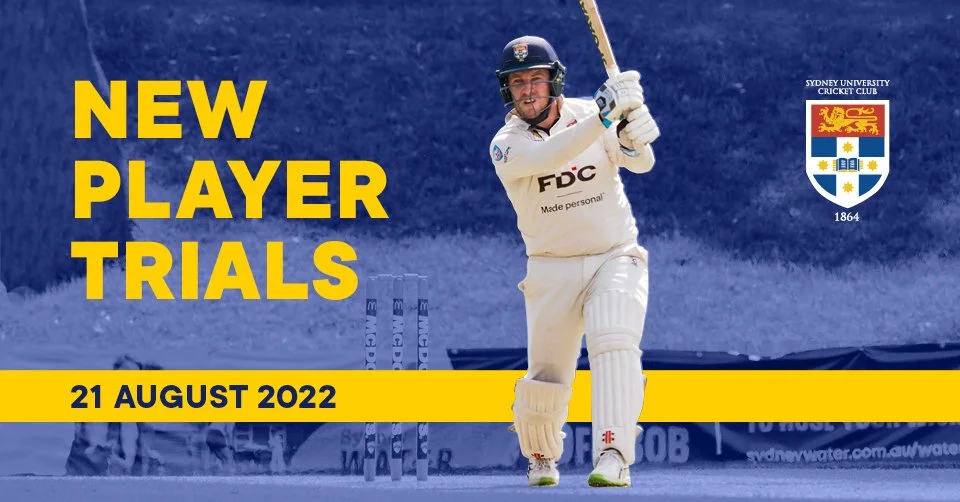
Sydney University Cricket Club New Player Trials Season 2022/23

Sydney University Cricket Club New Player Trials Season 2022/23

SYDNEY UNIVERSITY CRICKET CLUB NEW PLAYER TRIALS SEASON 2022/23

NEW PLAYER TRIAL APPLICATIONS HAVE NOW CLOSED

We are in the process of analysing the stats and will send invitations and session times to the successful applicants by Wednesday next week. We thank you for your patience.

Dear Cricketers

The Sydney University Cricket club invites cricketers who are interested in attending our New Player trials to be held on Sunday 21st August from 10am to 3pm to apply by clicking on the link below.

Applications apply to players wishing to play Premier Level Cricket in the Sydney Grade Competition

Please NOTE- All applicants must be over the age of 16 years old as of the 31st August 2022 (only those players not eligible for AW Green Shield selection will be considered)

Once we receive your applications, emailed invitations will be sent to the successful players allocating a time slot on the above date.

*PLEASE NOTE THE TRIALS ARE BY INVITATION ONLY;

*IF YOU ARE A USYD STUDENT PLEASE MENTION THIS ON THE FORM;

*APPLICANTS MUST BE AUSTRALIAN RESIDENTS TO QUALIFY

________________________________________________________________________________

The trials will take place at:

The Martin Lambert Indoor Nets

TAG Family Foundation Grandstand

Building 23 Regimental Drive

The University of Sydney

Camperdown

Applications close on the 3rd August at 5pm

Best in Cricket

SUCC

Honorary Fellowship awarded to University sportsman Rodney Tubbs

Honorary Fellowship awarded to University sportsman Rodney Tubbs

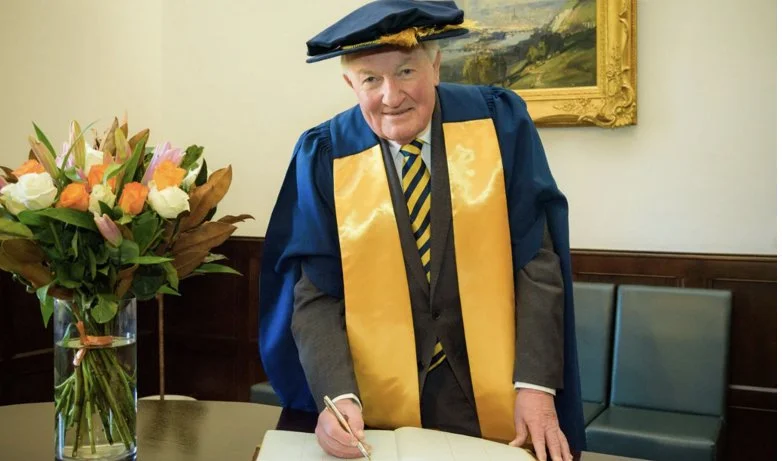
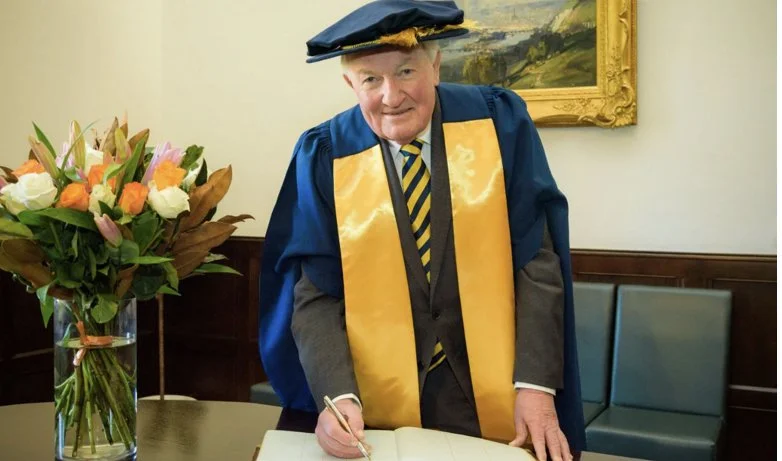
Rodney Tubbs, an alumnus of the University, has received an Honorary Fellowship for his ongoing dedication to the University of Sydney's sport and fitness community.

Rodney Tubbs was awarded the fellowship in a ceremony presided over by University of Sydney Presiding Pro-Chancellor, David Mortimer.

An avid footballer, Mr Tubbs – affectionately known as ‘Tubbsy’ to his university peers – first became involved in the University’s sports and fitness community in 1965 as a player in the Aussie Rules Football Club. 

Mr Tubbs’ time in the Club left an indelible mark on the wider University sporting community. Not only was he named the Club’s ‘best & fairest’ winner, but he also captained and coached their senior side to an inaugural premiership victory. In 1967, his excellent sportsmanship in Australian Football was acknowledged with a University Blue – one of the highest honours a sportsperson can receive at the University of Sydney.

Since 1996, Mr Tubbs has been instrumental in advocating for and supporting University athletes. Initially reconnecting with the University’s Sports Union, he has run more than 100 fundraising functions for the ‘Blue & Gold’ Club, which he established to celebrate the University’s sporting alumni. 

Rodney Tubbs at his Honorary Fellowship conferral.

In later years, he worked with the Sydney Uni Sport and Fitness (SUSF) Executive Director to start the University of Sydney Sport Foundation. From 2005 until last year, Mr Tubbs was the Chair of the Foundation – managing corporate and alumni relations, fundraising for sporting clubs, and, most importantly, facilitating a strong a sense of belonging and community. 

“Over the last 20 or so years, Rodney has made an unparalleled contribution to Sydney Uni Sport and Fitness,” Presiding Pro-Chancellor David Mortimer said. 

“His extraordinary dedication has helped shape the community and has ensured student athletes are afforded the opportunities they need to thrive. Not only did he establish the ‘Rodney Tubbs Scholarship’ for Australian Rules Football, but he played an instrumental role in establishing the Commonwealth Bank of Australia Indigenous Scholarship, which is awarded to young Indigenous athletes.

“I am honoured to confer him as an Honorary Fellow of the University.”

Honorary degrees are awarded to individuals who have made an outstanding contribution to the wider community or who have achieved exceptional academic or creative excellence. Mr Rodney Tubbs has been awarded an Honorary Fellowship.

GREG SCAHILL 98 not out

GREG SCAHILL 98 not out

Greg SCAHILL celebrated his 98th birthday on 22 June. The Club joins in the celebration for our second oldest former player. (Kendal Binns will turn 100 in March next year). 

Greg played for SUCC from 1941 until 1944. He studied Engineering and served in the Australian Army. He then turned out  for the Veterans until the 1970s. 

He is a former President of the Club (1973-1976), a Vice President since 1972 and a Life Member since 1977. He still retains a close interest in the Club. 

When he was President, he gave great practical assistance to the Club even coming out of retirement to play two games when 5ths were struggling for numbers during the holidays. 

Greg was much in demand as an after dinner speaker at Club functions. His self-deprecating humour and breadth of knowledge  were always much appreciated and fondly remembered. 

James Rodgers

A Tribute to Dr. Bryce Cooper, NSW and Sydney University Cricket Club

A Tribute to Dr. Bryce Cooper, NSW and Sydney University Cricket Club

DR BRYCE COOPER

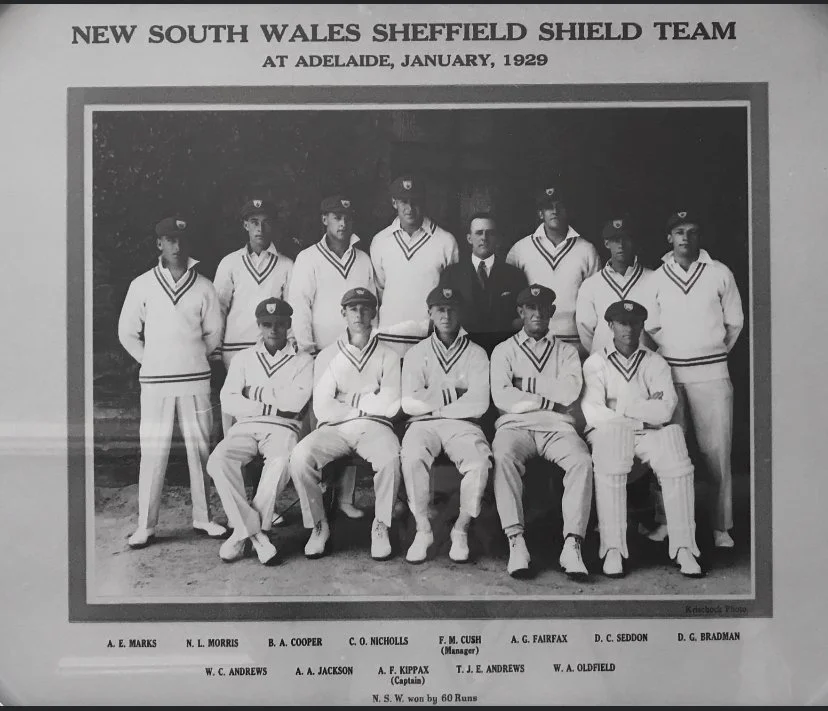
Dr Cooper served Quirindi and district as a general practitioner for 41 years, but was also a talented sportsman, representing Sydney University in the first-grade cricket competition, athletics, baseball, and swimming.  In 1929 he was selected in the NSW Sheffield Shield cricket team, captained by Alan Kippax and alongside international players Archie Jackson, Donald Bradman, and Alan Fairfax.  Dr Cooper opened the bowling for NSW.  He was also offered the opportunity to travel to England and play with the Australian team.  Unfortunately, he had to decline this offer as his plan was to remain in England for work experience, and it was a proviso that the team travel both to and from England together.

Leaving Brisbane in June 1932 for England, Dr Cooper was Assistant Ship’s Doctor on board the “Port Bowen”.  Once in London, he worked as a casualty officer at the National Temperance Hospital, and as House Surgeon for the Royal Waterloo Hospital for Women and Children.  He served as Ship’s Medical Officer on his return to Australia, leaving Christmas Eve 1934.  

Dr Cooper spent most of his working life in Quirindi, from early 1935, when he took over Dr Hessell Howell’s practice at 8 Dalley Street, until his retirement to Sydney in 1975 due to ill health.  He was born in Lewisham, Sydney in 1905 and studied Medicine at Sydney University.  He trained at Royal Prince Alfred Hospital, Royal Women’s Hospital and Prince Henry Hospital.  

Although a general practitioner, Dr Cooper was also a specialist in gynaecology.  He is said to have delivered some 3,000 babies in the Quirindi district.  When he first came to Quirindi, obstetrics was mostly done in the home until addition of an obstetrics block at the hospital.

Some stories from Dr Cooper’s Memoirs, published in Quirindi Advocate, June 30, 1976 on his retirement, include a trip beyond Caroona through floodwaters to treat a patient.  “He drove his English Austin 6 to the railway bridge, crossed the railway line by train, transferred to horseback and with his bag sitting on the saddle pummel eventually got to treat the patient…”  Another was an accident north of Wallabadah on the highway where he found “an upturned panel van and two ‘green people’ wandering about…”  The publican and his wife from Wallabadah had been to Tamworth, where they had purchased green paint, spilling out when the vehicle overturned.

A farewell was held at Quirindi Pavilion upon Dr Cooper’s retirement, attended by around 400 people, “a testimonial to his position in the community.  The Pavilion was beautifully decorated by members of the Quirindi Garden Club with two big arrangements on the stage and table decorations on the supper tables”. (Over the Teacups – Quirindi Advocate June 30, 1976)

Whilst in Quirindi and district he was actively involved in the golf club, tennis club, swimming club and bowling club.

Dr Cooper passed away in Sydney on May 19, 1995

Quirindi Historical Cottage and Museum has a collection of medical instruments used by Dr Cooper in his medical practice, including a stethoscope, tweezers, scissors, scalpels and other small items.  His brass professional plate hangs in the hallway.  More recent donations include the NSW Sheffield Cricket Team pullover worn by Dr Cooper whilst playing in 1929 and a framed photograph of the team.