RIP Dr. George Frank Hugh Stening

RIP Dr. George Frank Hugh Stening

Dr. George Frank Hugh Stening

Frank Stening, one of University’s outstanding cricketers of the 1950s, died on 10 May 2022 at the age of 85.

Dr Stening entered University to study Medicine in 1955, following a very successful career in school cricket at Cranbrook.  Possibly at school his batting was more highly regarded than his bowling – he scored 101 not out against Barker in 1953-54 – but he was the leading all-rounder in an unusually strong Associated Schools competition that featured players like Gordon Rorke and Neil Marks.  University’s selectors were quick to seize on his potential as a fast bowler, and he was hurried into the First Grade side in 1955-56.  It was a steep learning curve, and he captured only a handful of expensive wickets in that first season.  He later recalled that

It was daunting to be playing with and against names you had only heard of and not met. Grade cricket in those days was strong and you played regularly against the state players and internationals. Remember too, that NSW was virtually the Test side.  And there were many grade cricketers as good as the internationals playing in the competition. In 1955 Peter Hall was our captain, a debonair and slightly eccentric architectural student/graduate. He would arrive at the cricket attired in a Uni Blues blazer driving a vintage car or Bentley that stood out amongst the opposition, and us, especially at places like Bankstown.  He was unfailingly polite and a handy, but not brilliant, cricketer. My second game in First Grade was on the Monday of the long weekend against Manly at Manly and Keith Miller was captaining Manly. There was a decent crowd there to see Miller, who had been controversially dropped from the Test side. I can remember he strolled into our dressing room before the start not knowing any of us except Saxon, and wanted to know our captain. Peter timidly, but very presentably, indicated he was and Miller immediately demanded 'do you want to bat or bowl?' Peter responded that he thought we should toss, to which Miller responded 'you bat', which we did. They beat us by an innings in the day and Miller did virtually nothing other than to run me out. That was really how we were accepted in grade and we ended the season not winning a game and having, I think, one draw.

The following season, Dr Stening made a useful contribution towards the First Grade team’s surge to the semi-finals.  Unfortunately, in the last match before the finals, he held a spectacular diving catch at backward square against North Sydney, but broke a rib in the process, and could only look on as Glebe overpowered the students.

By the start of the 1957-58 season, he had developed his pace and stamina and became a genuine force in First Grade cricket.  A few critics complained that he didn’t move the ball very much, but at his best he could be as quick as any bowler in Sydney.  In December 1957, he bowled 18 eight-ball overs in an afternoon to claim 5-67 against a strong St George side.   Although he and his new-ball partner Dave Walker suffered from limited support and some terribly fallible catching, Stening ended the season with 34 wickets at the excellent average of 19.  He also scored his first half-century in First Grade and earned his first representative selection, for a Metropolitan team against a combined Newcastle-Illawarra side.  He improved still further in 1958-59, claiming 35 wickets at 13, including a conspicuously hostile spell of 7-30 against Bankstown.  He was chosen in the NSW Colts team for the annual match against Queensland Colts and, although his bowling was hampered by an ankle injury suffered in the week before the game, he followed his two wickets with a match-saving innings of 56 (against an attack that included, in Tom Veivers and Peter Allan, two future Test bowlers).  His hard-hitting batting was often valuable in University’s lower-middle order.

Although his pace had dropped a little in 1959-60, Stening still managed 30 wickets at 16 in 1959-60, and also hit his highest First Grade score, 60 against North Sydney.  That innings ended in unusual circumstances: not out overnight, he was nowhere to be found when play resumed on the second day of the game, and was “timed out”.  When he eventually appeared at the ground, he blamed his lateness on a punctured tire, and grabbed three wickets to help University win a tight match by 16 runs.  Altogether in First Grade he scored 779 runs at an average of 15.9 and took 114 wickets at 20.

George Frank Hugh Stening was born on 20 October 1936 and died on 10 May 2022.  He is survived by his second wife Loekie, their daughter Nadina, and his sons Mike, Angus and Tom.  The club extends its condolences to Dr Stening’s family.

 Max Bonnell


The Patrons of Sydney University Cricket Club

The Patrons of Sydney University Cricket Club

THE PATRONS OF SYDNEY UNIVERSTY CRICKET CLUB

There have been ten Patrons during the Club’s existence.

The first two were appointed by reason of their position at the University:

Sir Edward Deas-Thomson (1800-1879) was Patron from 1868 until 1879 during which time he was also the fourth Chancellor of the University.

Sir William Montagu Manning (1811-1895) succeeded Deas-Thomson as Patron of the Club from 1880 until 1887 and also succeeded him as Chancellor of the University.

Neither Deas-Thomson nor Sir William Manning ever played for the Club.

For some reason, the position was then vacant from 1887 until the appointment of ABS White in 1939.

Then, RJA Massie served as Patron from 1944 when White retired until Massie himself was forced to relinquish the position when he was appointed as Chairman of British and American Tobacco Company in London in 1946.

Both White and Massie had distinguished playing careers with the Club and both had represented NSW.

Massie was succeeded by Dr Thomas Clouston (1946-1962), Captain John Morris (1962-1975), Sir Hermann Black (1975-1990), Dr Jim Mackie (1990-2003), Alan Crompton (2003-2020) and James Rodgers (2020- ).

This is the story of the fifth Patron, Dr Tom Clouston (1878-1962). Stories of the other eight will follow.

TB Clouston was born in Ireland but emigrated to Australia with his parents in 1881. His father, Reverend Thomas Edward Clouston (1849-1913), was a Presbyterian Minister, appointed to the parish of Penrith from 1881 until 1891 and then to Glebe for the next twenty years. He also lectured in Historical Theology at St Andrew’s College within the University and was later a Professor of New Testament Theology and Church History. He rose to the position of Moderator of the General Assembly of the Presbyterian Church in Australia.

One TB Clouston’s sisters was Mary who married Percy William Dive who played one game for NSW as a  41 year old leg spinner but their daughter, TB Clouston’s niece, was Mary (Mollie) Dive, captain of Sydney University Women’s Club, captain of NSW and captain of Australia. A grandstand at North Sydney Oval is named in her honour.

TB Clouston studied Medicine at the University, graduating in 1905. During his undergraduate years he played 3rd Grade for the Club during 1901-02 at least. He was Secretary of the 3rd XI and one of the team’s selectors. Records of that team and any other that TB Clouston may have played for are now unfortunately lost.

He married Muriel Isabel (nee Smail) in 1906 but his medical career at Pambula and Tumut, and enlistment as a Captain in the Medical Corps of the 1st AIF in 1918 took him out of Sydney for many years.

Following RJA Massie’s retirement as Patron in 1946, the Club turned to Dr Clouston, who may not have had much close connection with the Club for over 40 years, to fill the position. In the early 1940s, he once again supported the Club and was closely associated with the Veteran’s XI, serving as Secretary to the Vets and as a Delegate to the City and Suburban competition. Despite his advanced age (he was in his 70s for most of his time as Patron) and increasing immobility (he eventually had both legs amputated), he was much respected and admired. He took especial interest in the Veterans’ XI which was at the time made up of graduates, former playing members of the Club.

When he died in April 1962, FC Rogers, who had played for the Club at about the same time as Dr Clouston, wrote a heartfelt obituary for the Annual Report and one of the Veterans paid this fine tribute:

 “Our beloved Patron, a familiar figure to so many of us during past cricket seasons…Courage comes in many different forms but none so rare as that shown by Doctor Tom.”

A half brother (his father remarried when his first wife died) was Edgar Boyd Clouston, a Medicine I student in 1914, who died of wounds in Belgium in September 1917, aged 22. He may have also played for the Club in 1914.

James Rodgers


THE PATRONS

 ALFRED BEECHER STEWART WHITE 1879-1962

 PATRON 1939-1944

ABS White has a record that’s unlikely to be approached or broken.

His last game in Grade Cricket for SUCC as an undergraduate was in October 1900. In the first two rounds of the 1900-01 season, he opened the batting for the Club’s 1st XI which was in exile, playing in the 2nd Grade competition for four seasons because of a protracted and acrimonious dispute over the eligibility of players for SUCC. White scored 60 against Norths and then 25 against Burwood before sailing to England.

His next game in Grade cricket for SUCC occurred 41 years later in 1941-42. These were grim seasons when many cricketers had enlisted. There were one day games only between the clubs but no Premierships were contested. SUCC struggled to fill a 3rd XI. Enlistments, military camps and the inevitable long vacation reduced available players to a trickle. The Club was granted a dispensation and two Graduates were permitted to play in 3rd Grade. Nevertheless, 53 players took the field for the 3rds during the season. The Club turned to its venerable Patron, ABS White, to captain the side. His sense of duty and responsibility to the Club characterized his response. White had been playing most successfully for the Veterans for over 30 years. He had an enviable record for North Sydney CC after graduation and had played four times for NSW. He and Syd Webb, the President of the Club, (who also returned to Grade cricket in the 3rd Grade side) held SUCC together during these trying times.

Limited statistics were published for the 1941-42 3rd Grade side. We know that Matthews scored 329 runs; that Wilkinson scored 287 runs and that Fred Smith, who had played two years in 1st Grade before the War, took 36 wickets. Did ABS White also score runs as he had been doing in almost every level of cricket for 50 years? After all, in his last two seasons with the Veterans, 1936-37 and 1937-38, he’d been dismissed only three times and had averaged 129. Unfortunately, no other statistics for 1941-42 survive. It was, however, an extraordinary comeback for a player aged 62.

Alfred Beecher Stewart White had been born 4 October 1879 at Mudgee, one of three sons and three daughters, to Robert Hoddle Drieberg White 1838-1900 and Eliza Jane (nee Cowper) 1844-1927. He was sent to the newly established Sydney Church of England Grammar (‘Shore’) School and quickly showed promise as a cricketer, an upright batsman who scored runs with his technically correct on drives and  deft late and back cuts. His first game for the school 1st XI was on 1 November 1893, just after he had turned 14, against Newington in the newly formed GPS Cricket competition. He batted at number three and made 13 which was the highest score in Shore’s dismal 46. In his second game a few weeks later, he opened the batting with Gother Clarke who was to represent NSW and to be killed during the Great War. For most of the rest of his long career, White went in first. Shore’s batting was consistently weak but White stood out, averaging 30 in his first season, but even he could not stop the inevitable collapses in 1894 when, aged 15, he captained Shore’s 1st XI. Successive all-out scores of 29, 25, 45, 64, 60, 27, 42 and 8 for 35 characterised Shore’s abysmal season when they won no games and finished last. From then on, until 1898, Shore relied on White and he rarely disappointed, scoring 2745 runs @ 45.7 in all 1st XI games including 163 not out in the 1898 game against Newington at Stanmore. He bowled tidily.

Going up to the University in 1898, he had developed into a tall, well-built athlete who easily fitted in with the University 1st XI, unfortunately playing in the 2nd Grade competition only. He also represented the University Football (Rugby) Club. For the cricket team, he scored a century on debut, 117 not out against Manly, accumulated 617 runs @68.5, and took 32 cheap wickets. In 1899-1900, his form fell away (259 runs @28.8) because of his studies, so it was said, and in 1900-01 he played just two matches, despite election to the Club’s Committee, before sailing to England. His SUCC Grade career seemed to have finished. He returned to Sydney, married Adele Julie (nee Pitt) in 1903 and resumed his Grade career, this time with North Sydney and took his first steps in the family’s stockbroking firm, ‘ABS and Co’.

He played briefly for North Sydney’s 1st Grade side in 1903-04 and also, when he was available, for the SUCC Veterans, where he scored 392 runs @49 and took 20 cheap wickets. His beginning to the 1904-05 season, however, can scarcely have been more explosive. In North’s 2nd Grade, he began with an astounding 278 not out in a total of 8 for 698 against the hapless Manly side. This 278 has, for 119 seasons, remained the highest individual score in 2nd Grade among all Clubs. White followed this with 149 against Glebe and after two rounds had scored 427 runs @427. Within thirteen months, he had made his 1st class debut for NSW against Queensland. Restored to 1st Grade, he continued his batting marathons at the crease: 198 not out against Middle Harbour in 1905-06, then, 151 in a trial match for the NSW 2nds. In 1906-07 in a similar trial game he scored 181.

The Sydney Morning Herald commented:

“His style is different from most of our leading players, but he is one of our soundest batsmen, also a good field.”

What was “different” about his “style” was not explained but he kept scoring runs, eventually finishing with 2172 runs @49.36 for North Sydney.

Spread across four seasons, he represented NSW four times, all against Queensland , finishing with 291 runs @48.5 including a score of 147 in his last 1st class season, 1908-09. He batted 250 minutes for his 147 in Brisbane and hit 15 fours. In Sydney in January 1909 he was captain of a NSW side that lost by two wickets. He contributed only 21 and 8 with the bat and his 1st class career was over. He had also played for NSW in a two-day game against Fiji in 1907-08 when he scored another century and took 4-18 with his off breaks.

For the next 30 years, he continued to dominate the SUCC Veterans’ averages. When many of the pre-war players returned to cricket it was to play for ‘The Vets’. For instance, in 1921-22, White was joined by Jack Massie, Paddy Lane, Cecil Rogers, Joe Woodburn, Hugh Massie, George Willcocks, Archie Blue, Iven Mackay, AH Garnsey, Percy Penman who had all represented SUCC’S 1st Grade with distinction in the earlier years of the 20th century. Without flourish, White once again scored most runs, 539 @49 and again took cheap wickets, 23 @12. Jack Massie, a decorated and severely wounded war hero, however, bowling now off a few paces, was unplayable. His 85 wickets for 829 remains, unsurprisingly, a record for the SUCC Vets.

ABS White continued to turn out for and, most often, captain the Vets. His form, even approaching his sixties was irresistible as he accumulated over 7000 runs and took over 400 wickets. He simply scored runs wherever he played.

He still took a great interest in the Club and served as President for a time.

Then, in 1939, the Club resurrected the position of ‘Patron’ which had remained unfilled for over 50 years and it was ABS White who presided then for the next five seasons, including 1941-42 when he answered a most unlikely request to return to Grade cricket.

Even after stepping down as Patron in favour of Jack Massie, White continued his lively interest in the Club which only ceased when he died in 1962.

ABS White’s son, Edward Clive Stewart (Ted) White 1913-1999, was a tall slow left arm bowler who played 56 first class matches after graduating from Shore School in 1932. For the Shore 1st XI he took 175 wickets in four full seasons and scored over 1000 runs. Selection in North Sydney’s 1st Grade was followed by a first class career that spanned the seasons from 1934 to 1939. He took 8 for 31 against South Australia in 1935-36 on a rain-affected pitch and he was taken to England with the 1938 Australian side. In a dry English summer his bowling did not have the impact that was hoped for and he was not used in any of the Test Matches. He served in World War II and was eventually promoted to the rank of Major. After the War, he resumed his cricket career, this time with IZingari, and was still bowling well enough approaching his sixties to capture 823 wickets for the club during a career of over 20 years.

James Rodgers

Acknowledgements to Max Bonnell and Dr Colin Clowes.

SUCC Award Winners 2021/22

Congratulations to the following award recipients!

Farewell Alan Crompton OAM

Farewell Alan Crompton OAM

ALAN CROMPTON OAM

1941-2022

There is no one in this place today, not one person, who doesn’t feel an enormous debt of gratitude to Alan Crompton. Heartfelt tributes have poured in from far and wide. We are united in grief, while we express our heartfelt sympathies to Gabby and Jo and all Alan’s family.

Those of us who knew Alan so well, those of us who played with him in the same cricket club for so long, the Sydney University Cricket Club, couldn’t be more proud than to see him so deservedly celebrated here today, even though we are somewhat diminished by his passing.

Simply put, Alan served the game which we all love with such a generous heart and with a graciousness that has been unsurpassed in our 159 year history.

The spirits of those who’ve built our club and who have gone before us are once again with us here today. They stand tall among the generations of our club, our University. Beginning with John Kinloch and Monty Faithfull to Tom Garrett, to Syd Webb, to Skip Morris, to Jim Mackie, to Mick O’Sullivan. They’re all here in spirit to honour the most recent addition to their number, Alan Crompton. The game we play is so much the better for their abiding guardianship of it and their indelible influence and example on all of us.

Incidentally, Judy O’Sullivan said that somewhere in the Elysian Fields  Micko is bowling into a gentle breeze while Crommo crouches expectantly behind the stumps.

The Club we all have played for is in its current golden era undoubtedly because of their vision and in particular because of Alan’s unfettered enthusiasm spanning the generations.  In all that time, no one has served for as long as Crommo did. 61 years of continuous service. Firstly as a player, a peerless wicket keeper, a batsman who scored over 7000 runs in Grade cricket. A Premiership winner, a captain. Then, as he scaled the administrative ladder, Honorary Secretary of the Club, a Vice President, Delegate to and Chairman of Cricket NSW, Chairman of the Australian Cricket Board (now Cricket Australia), Manager of numbers of Australian teams overseas including the victorious World Cup winning side of 1987, President of the Club for 22 years, Life Member, Patron of the Club for another 20 years. A Blue for Cricket, a Gold for Cricket, a Blue for Baseball. Honoured by Her Majesty in the Queen’s Birthday Honours list.

Now all those achievements and all those titles don’t necessarily tell us much about the man, except that one word in front of ‘Secretary’. ‘Honorary’. All Crommo’s indefatigable work has been largely unpaid, unrewarded financially but mightily rewarding for everyone else who appreciated him, respected him, admired him, loved him.

His profession was the Law. We remember that he was part of the only legal team in the world to defeat Mr Packer in court at the time of World Series Cricket. But cricket was his vocation.

Now we all know that Crommo has had a rather deserved reputation for the verbose, loquacious, prolix, periphrastic even. Brevity was a word that never appeared in his lexicon. Ed Cowan once observed that in the inflexibility of the twitter age where messages were reduced to 140 characters, 140 minutes was still not long enough for Crommo.

I know that his meticulous and legalistic attention to detail could be exasperating but it always provided opportunities for good-natured satire.

In 1963, he headed a sub-committee which was to report on the issue of practice balls. The following resolution was faithfully recorded in the Club’s Minute Book, and it read:

“Resolved that there be a book, entitled the ‘balls book’. This book is to account for the issue of all new balls and the return of all old balls. The groundsman is to have custody of the book and to make it available for perusal by the committee from time to time as the committee shall determine.”

Priceless!

When the Club was faced with the greatest threat in its history, one of Crommo’s sub committees once again saved us. The issue concerned the price of after match beer cans in 1973, a year of rampant inflation in Australia. Should we sell them for 30 cents a can or should we put the price up to 35 cents? After rather protracted and exhaustive discussions during which the rate of inflation undoubtedly overtook the original question, Crommo reported that we could now buy 3 cans for $1.

Priceless!

On field incidents seemed to follow Crommo around. An opposition batsman hit the ball far into the outfield on No1 Oval. Fieldsmen gave chase until the ball was retrieved metres from the fence. Meanwhile, Crommo, hastening up to take the throw, slipped and careered into the stumps sending them flying. The throw was on its way as Crommo desperately tried to remake the stumps scrabbling around looking for bails amidst the wreckage. He flung his glove off just as the ball reached him and he attempted, unsuccessfully, to catch it while it sailed over his head. No one had thought to back the throw, possibly because they were all in paroxysms of laughter. The batsmen kept running, the stumps still askew. The result? 5 runs. Bails still scattered on the ground. Crommo searching desperately for his abandoned glove.

Priceless!

As with everything on and off the field, Crommo was unfailingly cheerful and optimistic even in the face of potential disaster.

He looked after a club where friendships are cherished, where relationships are lasting, where generosity and self-sacrifice are mixed with much laughter and fun and enjoyment. Crommo lived those ideals, especially through his natural generosity. Time after time, he put the club first, the team first, other players first. Significantly, the club always went back to Crommo.

When we won, Crommo was gracious. When we lost, Crommo was gracious.

He won two 2nd Grade premierships, 16 years apart. The tears of joy that he shed after the last thrilling moments of the pulsating Grand Final of 1980 were proof to the younger players of just how much this triumph really meant.

In Crommo’s estimation, people were at their best when playing cricket with a generosity of spirit. He gave us the gift of time and a deictic example of playing for the sheer love of the game, a love of the club and of its players that endured for 61 years, not through money or facilities or mercenary players but by sheer goodness where he made sure that each player and each supporter belonged from the very first moments that they turned up, where sacrifices were made to invigorate, to build, to sustain the community of  Sydney University cricket.

It's hard to think of the Sydney University Cricket Club without thinking of Crommo. He has mirrored the club to itself and he has given expression to its soul.

Now, Crommo is gone….

But not quite.

He could never leave on time anyway.

But his undoubted legacy lives on.

Even though something of our soul goes with him.

We will carry on in his name because his was an exemplary life, lived for us, in the service of others.

And as we say in ancient Rome

Euge bone serve et fidelis.

Well played, Crommo. Good and faithful servant of our great game!

Well played. Good and faithful friend of us all.

James Rodgers

24 April 2022.

The Landing at Gallipoli 107 Years Ago

The Landing at Gallipoli 107 Years Ago

“107 years ago today, the landing at Gallipoli occurred.

Over 100 players and former players from SUCC enlisted.

17 never returned.

Here is the story of a former 1st Grader who was killed 107 years ago this Wednesday on a place at Gallipoli that is now named after him.”

—————————————————————————————————————————————————————

Lt Colonel Henry Normand MacLaurin of SGS

Born in Sydney 31 October 1878

 Killed at Gallipoli 27 April 1915.

MacLaurin is remembered at Gallipoli by a landmark called ‘MacLaurin’s Hill’.

He was a highly successful barrister, active in the militia forces when he enlisted on 15 August 1914, almost as soon as war was declared, and just over a week before his father died.

Tony  Cunneen, who has done invaluable research into lawyers’ service in the Great War, has written about the NSW legal profession:

         “While they were certainly members of what the historian Manning Clark called the “comfortable classes” they were also willing to forgo the security and safety of that class and give all their support to the cause of national identity and honour on the battle fields on the other side of the world.”

MacLaurin played only two seasons for Sydney University CC.  In 1896-97, after scoring only 44 runs at 7.3 in 2nd Grade, he was inexplicably promoted to 1st Grade (1st Grade cap number 53) where he played another two games without distinction (15 runs at 7.5). In the season when the Club was readmitted on humbling terms to the 2nd Grade Competition in 1898-99, MacLaurin was twice selected in  the1st XI  (which won the 2nd Grade competition). An energetic 54 was followed by a non-descript 5 and he played no more.

A cousin was Ambrose Freeman (1873-1930) who played one 1st Grade game for SUCC in 1902 and whose brother, Douglas Freeman was killed at Quinns Post, Gallipoli, a week after MacLaurin was killed.

His mother was Eliza Ann (nee Nathan) (1846-1908) and his father was Sir Henry Normand MacLaurin (1835-1914), a Scotsman, Chancellor of the University of Sydney from 1896 until his death. He was also President of the Legislative Council, the Upper House of the NSW Parliament. A dominant figure in conservative politics, he was nevertheless admirably open to fresh educational ideas, especially those brought forward by the NSW Labor Government of 1910 which related to the reform of the Senate of the University. His second son, named after his father, was educated at Blair Lodge School Polmont in Scotland, a private boarding academy for boys, and then at Sydney Grammar School. Two other sons, Charles and Hugh both served in the War.

Charles was the father of Catherine who was in turn the mother of a prodigiously talented family including Alistair Mackerras, Headmaster of Sydney Grammar School from 1969 to 1989. 

After graduation BA in 1899 and admission to the NSW Bar,  MacLaurin carried on his work as a barrister from 11 Wentworth Chambers in Elizabeth St, specialising in accountancy. He also pursued a military career. Commissioned in the NSW Scottish Rifles in 1899, he eventually rose to command the 26th Infantry Regiment in July 1913. When he enlisted in the AIF, he was immediately appointed Lieutenant Colonel, commanding the 1st Infantry Brigade, a force of 4000 men. At 36 years of age, he was young for such responsibility but he wisely chose more experienced men to command battalions under him.

In a letter to  Justice David Ferguson (whose son, Arthur, a Law student who had also been to Sydney Grammar, was killed in France in 1916)  in March 1915, MacLaurin confided that rumours of the soldiers’ bad behaviour in Cairo had been exaggerated.

          “With 20,000 men it can be easily seen that some would play up for a bit while their money lasted…”

He stood up for his men, attacking those civilians who were “doubtful and dissatisfied and critical”. Their accounts were “false and malicious”. Although he was a stern disciplinarian, he had a fine reputation among his men who respected his energy and enthusiasm especially when they trained under him in Egypt.

When orders of the landing at Gallipoli came through, Mac Laurin was said to have “happily cancelled his leave and bounded smiling up the stairs to the General’s office to plan the attack.” (Cunneen).

During the afternoon of 27 April 1915, at about 3.15 pm, MacLaurin “was standing on the slopes of the ridge that now bears his name… in the act of warning soldiers to keep under cover when he too was shot dead…MacLaurin was buried by his men where he fell.” In 1919, he was reinterred at the 4th Battalion Parade Ground Cemetery. He was posthumously promoted to Brigadier General.

He was the fifth of the 337 from Sydney Grammar who were  killed or who died in the War. An extraordinary 2172 ‘Old Sydneians’ enlisted. (I am indebted to Dr Philip Creagh who has carried out painstaking and forensic analysis of the Old Sydneians who enlisted). There was widespread grief among the legal profession. A ceremonial service to honour him was held at the Banco Court on 5 May 1915 and special mention was made in the minutes of the Bar Association.

He was the first of the Club’s former players to be killed.

CEW Bean, the Great War's pre-eminent historian, and the grandfather of Ted Le Couteur, a 1st Grader with the Club in the 1960s, wrote:

“…a man of lofty ideals, direct, determined, with a certain inherited Scottish dourness…but an educated man of action of the finest type that the Australian universities produce.”

Acknowledgements:

Mr Tony Cunneen

Dr Philip Creagh

CEW Bean


James Rodgers

Surjit Singh Gujral - Passed Away 20th April 2022

Surjit Singh Gujral - Passed Away 20th April 2022

SURJIT SINGH GUJRAL

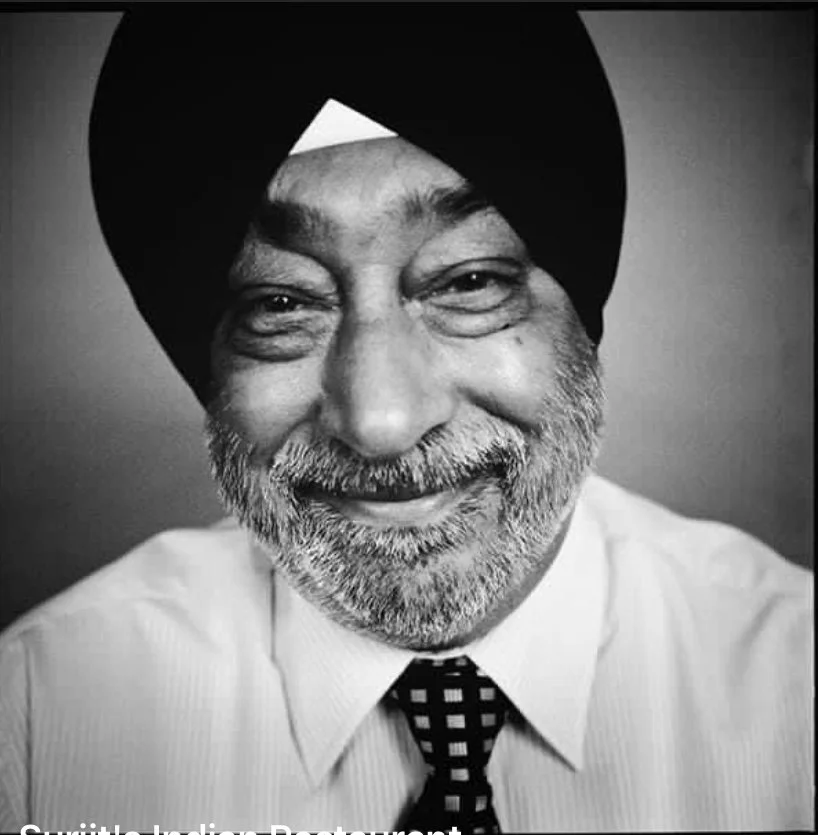
Surjit Singh Gujral. A long-time supporter and sponsor of our Club died suddenly on 20th April 2022. He was aged 67 years.

Surjit was one of three brothers who migrated from Chandigarh, Punjab, in the late 1970’s and initially he worked with elder brother Amar at his restaurant in Goulburn Street City. He learned the business and subsequently owned restaurants in Strathfield and Neutral Bay before buying the freehold for Surjit’s Indian Restaurant at 215 Parramatta Road, Annandale. For some years also he had a Sydney City Council lease and operated Surjit’s Angel Place where the Club held a number of memorable lunches.

Surjit’s sponsorship of our Club commenced in the late 1990’s and has continued ever since.

Surjit’s has catered for some of our most successful Annual Presentation Nights in the MacLaurin Hall and lunches in conjunction the Blue and Gold at the Football Grandstand facility. Surjit’s have also supported ‘Player of The Round’ for many years.

Surjit and Surjit’s Restaurant was known internationally by the cricket communities in India and Pakistan. Surjit was a generous host, a benefactor, passionate about the game. He was a man who will be greatly missed by this Club and the broader SUCC community.

His son Rasan, who has run the outside catering business for some years will assume control of the business. We sent our condolences to Rasan and his entire family at this time.

Hartley Anderson

22nd April 2022