KENDAL BINNS RIP

KENDAL BINNS RIP

DR KENDAL OSWALD BINNS. 

 Kendal Binns was born 10 March 1923. He died on 11 December 2022 aged 99. 

It is with deep sadness and with sympathy for Kendal’s family that the Club records the death of our oldest former player, the oldest former 1st Grader (1st Grade 1941-44, cap no316), and the oldest former Cricket Blue (1942). 

After playing 1st Grade, Dr Binns played for the Sydney University Veterans for many years. 

The following eulogy was given by his daughter, Helen Lowe. 


Kendal Oswald Binns

He was batting beautifully and had reached a well compiled 99, looking comfortably towards his century when he was inexplicably bowled by a dubious ball from Covid Pneumonia. Thus ended the innings of my Dad, Kendal Oswald Binns.

Today I want to try and shed some light on what it was like to be the daughter of this wonderful man and some of the history which shaped his life. Funerals are stage managed affairs and even the time that we have today is hardly enough to do Dad justice. I will miss things and people and I am sorry for that, but following speakers will fill in some gaps.

So, let me begin by welcoming you all and thanking you for coming along to help us say goodbye to a wonderful father, grandfather, great grandfather and friend to many past and present.

Dad as born on the 10th of March 1923 to Ella and Oswald Binns of Bondi. He was one of two children, his elder sister , Marcia, to whom he was very close, passed away in 2013. Aunty Marcia's second son Howard is more than a cousin to me and we were more like brother and sister when we were younger. My other cousin, who bears dad's name, Kendal, cannot be here today but is represented by his son Earl.

Dad attended Bondi Public School ( that is when he didn't beat his mother home in the morning). He subsequently went to Randwick Intermediate High and Sydney Boys High School for his final two years--obtaining his Leaving Certificate in 1940. He always said that notwithstanding the Great Depression, that these were idyllic years where sport, the beach and a generally healthy lifestyle took precedence over academic achievement. My grandfather was a pharmacist so dad was fortunate that he could be reasonably supported during these formative and difficult years. It was here that his sporting prowess came through. Dad captained both the Randwick High 1st XI as well as the Sydney High School 1st XI in his final year. He also led both the CHS and GPS premiership winning teams and in addition, played in the AW Green Shield and Poidevin Gray competitions for Waverly Cricket Club. He also represented Sydney High in their athletics team for the years that he attended the school. Dad was a School Prefect during his final year.

He had a natural ability for many sports and over the years he enjoyed Swimming, Athletics, Baseball, Tennis, Snow Skiing and of course his beloved cricket. In his mature years, his passion above all was Golf and even at 99, he was prepared to change his style, stance and grip in the unending quest to master the game.

After being accepted into Sydney University in 1941 to study Dentistry, he was immediately selected in the Uni First grade team. Dad also joined the University Baseball club and starred there as well. Ultimately he received double Blues for baseball and cricket. He was selected in the Baseball best ever team of the 1941 to 1970 era--so must have been pretty good! In both of these sports he played against many of the greats of the time. However, the best aspect of sport is the people that you play with or against and he made many lifetime friends during those years. One of these friends was the late Arthur  Morris ( who represented Australia in cricket from 1946--55) and who also became one of Dad's  patients.  They would apparently have spirited arguments about umpiring decisions for all test matches  between Dad drilling and Arthur rinsing out. Prior to Dad's passing, he was apparently the oldest living Uni first grade cricketer. Dad met lifelong friends such as Doctors Bob Norton,  John and Ray Newman and Jim Gillies, either  through the faculty, cricket or baseball. He later played on with the Vets until the 1960's. All the wives formed a strong bond through having to sit for many hours around the boundary at cricket. It has been reported that dad, as a member of the Shewahwah Boys was introduced to creme de menthe and a pale ale bearing his initials at this time. He also enjoyed a tipple or two of good whisky with his friend John Newman each week for many years. A beer after golf with his golfing partners and mates remained a treasured habit which was his only drinking vice in his senior years.

Dad continued with his baseball and was proudly a member of the NSW undefeated Jubilee Claxton Shield winning team of 1951. Baseball NSW will have an obituary to this effect in their forthcoming newsletter to members.

The war placed great demands on limited manpower and it was all hands to the pump in those years. Upon graduating with a 2nd Class Honours degree, Dad joined the army as a dentist. He was appointed to captain rank and posted to Darwin. This was at a time when the war had moved on and Darwin was no longer classified as being in the war zone. He did however, tell me some interesting stories about dental examinations of Japanese prisoners whilst under armed guard. At least he was never shot at! Dad stayed in the Army until 1947 and was finally posted to Victoria Barracks in Paddington.

It was at this time that he met Mum who was a nurse at St Luke's hospital, not too far away. They were married in 1948 at All Saints Anglican Church Woollahra, which incidentally, was the church where dad had sung in the choir. I, their only child was born the following year.

An old story relates to Dad and his close friends, Dr Bob Norton and Colin Ayres. Sports mad Dad and Uncle Bob had preferred sons but got daughters instead whereas Uncle Col, who was not so sporty got a son. Uncle Bob"s wife Betty, subsequently had a son, David. The upshot of this is that I became the sports mad PE teacher with Di Norton a dietician and Rob Ayres, a doctor. It is lovely to see Rob and David both here today.

 Mum and Dad were married for 74 years and Mum finally lost her battle with dementia on the 14th of October this year. Their's was a close but interesting relationship where they were very much opposite people. Mum was not in the least sporty but very competent with her hands. Whilst she was a dominant partner, Dad managed to be able to work within that framework to do his own thing much of the time. On the other hand, there were many things that he would not do without Mum's say so.

They spent their early married life at Rushcutter's Bay and built the family home at Epping where they resided for 62 years until finally moving to the Alan Walker Village at Carlingford. This was largely due to the work of an old neighbour, Fiona Johnson, who had put the seed into dad's mind. Many thanks to Fiona, John and Eileen Richardson ( who made dad's life so much better with their friendship and support) as well as Fiona Serafin from the Village Administration who also took mum and dad to heart. I am greatly indebted to each of them. Through John and Eileen, dad lately was able to renew his love for choral music through visiting concerts at the Alan Walker village.

Their 62 years at Epping covered my growing and teenage years. I must also mention another member of the family at Epping. A blue heeler who wandered into High Street as a puppy, covered in ticks--was cleaned up, fed and cuddled and we named him Rajah. He was a ferocious guard dog in his youth and was much loved and petted during his 17 years with us. It wasn't long before there was a series of Cavalier King Charles Spaniels with which dad would dog sit on the front lawn talking to the neighbours. This is where he would have met his good friend Tony Southall. Many a time Mum found herself in the spare room or the back seat of the car due to a dog's presence.

Dad was a wonderful supportive father to me growing up and we were and remained very close. He would get up early to take me to swimming training, would sit on the side line at tennis, not always in a good mood which was related to whether I was winning or losing. Dad and I were/are very competitive. At my School Athletics, he won all of the parents races until my last year when he was beaten by the father of a kindy kid--not  happy. In our first ever father/daughter swimming race--we won first prize which to our dismay, was a screwdriver. Ultimately he regularly took me for 9 holes of golf on a Sunday afternoon at Pennant Hills Golf club although I had a sneaking suspicion that there may have been an additional motive to go to that venue. In the middle years Dad and I played in the Lillian Marks Canadian foursomes at Pennant Hills--we never won it, thanks to the formidable pair of Tony and Wendy Gresham who were generally invincible. Dad  played in the ADA golf days ( I started the field)for many years. Mum and Barbara Hale undertook all of the preliminary set up on the morning of competition.. Dad with Rob Watson, Graeme Lowe and the committee organised the golf day for many years. I could tell some great stories about these events but you will appreciate that what happens on the golf course---stays on the golf course. Dad was involved with the sports committee which managed all of the ADA sporting activities for some 65 years.

I have a couple of anecdotes from Sue Mc Murchie, John Newman's daughter who lived several doors up the street from us.

The GPS head of the River regattas--our old Holden was swathed in chocolate and sky streamers and balloons for Uncle Kendal's Sydney High and yellow and black for my dad's Grammar. Much banter would take place between Epping and Penrith.

Dad and uncle Kendal were each other's dentist. Uncle K would get off the train at West Ryde and walk to dad's surgery and hop into the chair. When his consult was completed, they would swap places and Uncle K would return the favour. They were such great friends.

I tried to home in on when they actually first met and asked a number of people. I finally asked my sister Jan who said--"no idea-as it was so long ago".

Further to  Sue's regatta story, years later, Dad asked me to place the Sydney High flag at a certain spot near the finish line. When he later asked me what had happened I said that I didn't know because Sydney High had not passed the flag before we left.

Whilst Darcy will talk about the golf club and Dad, I just have to mention that Dad was always the one who would scurry down into the gully to retrieve errant  balls--he supplied himself, the juniors and his family with golf balls for many years thereafter, A new gofer is now required.

Another of dad's dental involvements was with Lodge Apollonia which was initiated in 1954. He later affiliated with the United Grand lodge. He and mum were involved in a lot of charitable work during this period. His Masonic involvement reduced in later years following closure of his lodge.

Dad was family orientated and always took an interest in his grandchildren. he supported them in their various activities and even installed a pool in his backyard for family use. Kristina will elaborate further on this. His immediate family now consists of myself and my partner Peter Lozan, My children  Anthony and Kristina and their respective spouses, Cynthia Lowe and Matt Falzon.  Great grandchildren, Ava and Fletcher Falzon and Ryan and Jessica Lowe. My former husband Graeme Lowe who was a fellow dentist and good friend of Dad's is also here today. It is interesting to note that Graeme also became a captain in the dental corps when called up for his national service. Our son Anthony similarly reached captain's rank and served in the Solomon Islands and Papua New Guinea. This made for three generations of Army Captains in the family.

Dad was an old school gentleman and a truly gentle man. He was loved and appreciated by many and his network of contacts over the years, particularly in the professions, was legendary.

It is clear that dad was still struggling with Mum's passing although we had hopes that he was starting to broaden his activities in the village. Pennant Hills Golf Club still called and his Wednesday golf was a must. He was very proud that the club saw fit to award him life membership last year for his long service.

It is only in the last three weeks that he went down hill. Up until that point, he was still able to drive locally and to the golf club and undertake most activities. Cooking, however remained a challenge which Pete and I increasingly attended to. His deterioration started with him only being able to complete 9 holes of golf followed by an ambulance trip to the SAN the next morning. Things moved rapidly from that point. Sadly Covid with pneumonia reared their ugly head and he passed away Sunday afternoon 11 Dec.  During his final days we talked about the past, he gave me instructions to return his Delta Sigma Delta Fraternity Pin, find his blazers from the top cupboard and he said how wonderful the doctors ( Barto, Zad and Yah Yah) had been. He also mentioned how much he would have looked froward to Fay Selig's wonderful Christmas shortbread. The experienced Edwina Spooner's intervention with the nursing staff led to me being able to visit during Covid. Ellie-his favourite nurse also supported his needs. Ellie said that he kept saying, and this would have been typical of Dad, "I don't want to be a nuisance". Dad's final words to me were "Helen, please, please let me go--I just can't breathe".

 Dad you are with mum now. We all thank you and our love and memories for you will live on for ever.


CAPTAIN WALTER JAQUES STACK DSO, (1884-1972). SUCC 1905-1913. 269 1st Grade wickets

CAPTAIN WALTER JAQUES STACK DSO, (1884-1972). SUCC 1905-1913. 269 1st Grade wickets

The cricket historian, Warwick Franks, has written to me recently:

“You might be interested in the fact that a Pillars of Bathurst feature has been developed on the western bank of the Macquarie River  - above flood height, thankfully. There are 80 names on 20 four-sided stone blocks which sit underneath a kind of wooden trellis structure. There was a process of nomination and committee selection of the names and my nomination of Walter Stack was successful. Unfortunately, his soldiering and doctoring took precedence over his cricket but, nevertheless he is there, a far-flung outpost of SUCC…

“Walter married Elinor Homes, daughter of a prominent Bathurst grazier, in 1930, when he was 46 and she was 22. They had one daughter, Mary, who was born c1935, and married Bruce Emmott, a grazier from Queensland, in 1961, and moved to his property which was about 150kms south-west of Longreach. After Walter's death, Elinor moved to Longreach (she was only in her early fifties) and lived with her daughter until her death in 1991. Mary must be close to 90 but is very sharp and aware and delights to hear of her father's cricketing exploits.” 

Doctor Stack’s long life may be condensed to the following facts:

He was born in Sydney but his family returned to England when he was 14 and he was educated at Dulwich College, a classmate and friend of the renowned novelist, PG Wodehouse.

The Pillars of Bathurst

When Walter enrolled at Sydney University, residing at St Paul’s College, his family had returned to Australia once more and were living in Strathfield.

Walter initially played 2nd Grade for the Club in 1905-06 before promotion to 1st Grade. He changed courses to Medicine in 1908, took two years off study (1910 and 1912) to enable him to concentrate on his cricket and represented NSW in seven games (his father, George, had played two games for NSW in 1866), bowling his leg spinners with such guile that he took 24 wickets for NSW in seasons when he twice took 50 wickets in 1st grade. He played in three 1st Grade Premiership sides, was captain of one of them, took 269 wickets @18.9 in 1st Grade  and finally graduated BMed in 1914.

He bowled from a short run and his calm, contemplative approach gave him significant advantage over impetuous batsmen. As was the custom at the time, he opened the bowling with a medium pacer at the other end. He was a batsman who was at his best in a crisis. In the 1905-06 Intervarsity match, his 9th wicket partnership with Eric McElhone produced 185 as Walter stroked his way to a stylish 116.

His form in 1st Grade grew increasingly irresistible and in one period of four seasons, he claimed 174 wickets. In the 1911-12 Final against Redfern, his 7 for 48 was decisive. In 1912-13, he routed Cumberland with 6 for 54 and followed this with 4 for 10 in the 2nd Innings as Cumberland capitulated, all out for 22.

Mid way through the 1914-15 season, Walter enlisted and in April 1915 sailed to Gallipoli as Medical Officer in 4 Battalion. He landed at Anzac Cove in July 1915. Twice he was Mentioned in Despatches for devotion to duty (at Lone Pine and at Pozieres in France) and was awarded the DSO with which he was invested by King George V in May 1919 at Buckingham Palace.

After he returned to Australia, Doctor Stack, who lived for another 52 years, qualified as an ophthalmic surgeon and married in February 1930. He continued to play cricket in Bathurst where he lived until his death.

His final representative game was in 1929 when Percy Chapman’s English team played the Western Districts of NSW in a two-day game in Bathurst. Walter, then aged 44, captained the local side and showed that his skill had not deserted him. He  caught and bowled Jack Hobbs and had Maurice Leyland caught in the covers. He finished with 2 for 45 and took two sharp catches at 1st slip in MCC’s total of 319. Batting at number nine, he contributed 16 and 0 not out as the home side was well beaten. 

As an undergraduate, Walter Stack was the Club’s Honorary Treasurer and 1st Grade Premiership captain. His 269 wickets were the most in 1st Grade for the Club until Peter James broke that record which had stood for over 60 years.

Doctor Stack was a NSW cricketer, a war hero, a skilful surgeon, a husband and father. Perhaps no one will ever repeat his rich mixture of varied experiences and virtues.

James Rodgers


FDC Family T20 Day 2022

FDC Family T20 Day 2022

As we get closer to our FDC Family Day, please see the details above for all that will be happening throughout the day!

Be sure to head to following link to purchase your adult ticket, which includes the lunch service:

FDC T20 Day Adult Ticket

Key details:

Date: 4/12/2022

Venue: University Oval No. 1

PGs: 10:00am

Restaurant Open: From 11:30am

Lunch Service: 1:00pm

Kids Cricket: 1:00pm-2:00pm

1st Grade: 2:30pm

We are looking forward to seeing you at Uni Oval 1 for this great day!

Captain WILLIAM ROBERT  ASPINALL, MC

Captain WILLIAM ROBERT ASPINALL, MC

This week, we remember one of our former players who was killed 105 years ago.

The story of a Grade cricketer, a NSW Rugby player, a medical doctor, killed at 24 in The Great War.                                                                                  

                                                                Captain WILLIAM ROBERT  ASPINALL, MC

                                                                                  SUCC 1912-14                                                             

William Robert (known as Robert) Aspinall was hidden from Sydney University Cricket Club memory for over a century.

He was never  listed among those who played for the Club and who gave their lives in The Great War.

His name is not among any averages or summaries in the Club’s Annual Reports for 1912-13 and 1913-14, during the time when he was an undergraduate.

The reason for this is simple enough, if not exasperating. 3rd Grade scorebooks were lost so that the 3rd Grade averages for 1912-13 were non-existent. And there’s no mention of WR Aspinall in 1913-14, even though there’s other evidence that he played in that season.

In 1917,however, there’s  a brief reference to him at the time of the death of Major Gother Clarke, a doctor who had played for Sydney University and NSW in the late 19th century. Amidst the details of Clarke’s death in The Referee, WR Aspinall is listed as one of a number of former Sydney University sportsmen and medical graduates who had been killed in  France.  Aspinall’s obituaries were being written, but not by the Club he had represented.

His former Cricket Club made no reference to him and that silence continued until this year, 103 years after his death. Meanwhile, there’s also another connection in his family to Sydney University and The Great War.

Robert’s only sister, Dr Jessie Strathorn Aspinall (1880-1953) married Ambrose William Freeman (1873-1930). Six weeks before they were married by Jessie’s father, Reverend Arthur Ashworth Aspinall (1846-1929), one of Ambrose’s brothers, Douglas, was killed at Gallipoli, at Quinn’s Post, and  one of his cousins, Colonel HN MacLaurin, also a Sydney University 1st Grader, was killed at what is now known as MacLaurin’s Hill. Ambrose Freeman had also been a Sydney University 1st Grader, for one match, against Sydney at Rushcutters Bay Oval in October 1902. No runs. One wicket. He played no more.

From 1925, Jessie and Ambrose then lived with their four children at Berida, 6 David St Bowral. Another family, the Bradmans, had just moved from 52 Shepherd St to 20 Glebe St, a few minutes’ walk from the Freemans. Donald, the Bradman’s 17 year old son, was the talk of Bowral when he scored an astounding 234 for Bowral against Wingello during that cricket season. there is some suggestion that AW Freeman and DG Bradman were related.

From 1990, Berida, with its 43 guest rooms, adjacent to the Berida Golf Club, has been a well appointed guest house.

WR Aspinall was the youngest of the five children who survived childbirth (twin sisters died soon after birth) of Reverend Aspinall and his wife, Helen. All five became medical doctors.

One of his brothers was the medical doctor who declared Don Bradman unfit to play in the 1st Test of the infamous Bodyline series of 1932-33.

He was educated at The Scots College in Sydney where his father was the founding Principal and where he was involved in three activities that would continue to shape his life. He was a cricketer, a Rugby player and a Colour Sergeant in the Cadet Corps. 

While studying Medicine at the University of Sydney, he joined the Rugby Club where he played from 1911 until 1915, eventually earning a Blue for Rugby where he played predominantly as half back and goal kicker. These were palmy and leisured days when one could study Medicine, play Rugby and cricket, and then do one’s duty by enlisting in the 1st AIF. Three Aspinall brothers turned out for the University Rugby Club in those years. Robert began in Second Grade in 1911, before playing 1st Grade in the following three seasons.  His path to representative honours was blocked by the NSW captain, Glebe’s Fred Wood, but when Wood was unavailable to tour Queensland in June 1914, Robert made the trip and played two matches for his State, against Queenland and a Brisbane Metropolitan team.

Meanwhile, as is now evident from several recently-consulted newspaper reports of the time, he played cricket for the University 3rds in 1912-13, scoring 33 against Glebe in December 1912.

The 3rd Grade side was weak while the top sides were dominant. As it was the lowest of the Club’s sides, it suffered more regularly from exams, vacations and whatever else induced undergraduates to declare their unavailability or just not turn up!

When Aspinall made 16 and 11 against Cumberland in March 1914, 3rds were bowled out for 51 and 38. His 21 against Sydney in the same season was the highest score in University’s two innings.

He graduated MB, ChM and was RMO at Sydney Hospital when he enlisted on 21 January 1916.  His three brothers also enlisted. Their mother had died during the previous year in England where she was holidaying and their father never regained his enthusiasm for life.  Robert’s three brothers all survived and returned to Australia but Robert saw Sydney for the last time on 16 March when he embarked on the ‘Malakuta’ with the rank of Captain in the 1st Field Ambulance.

By June, he had developed pneumonia and enteritis in Egypt and such was the gravity of his sickness that he was evacuated to Wandsworth Hospital in London. He gradually recovered but it took six weeks before he was fit enough to be sent back to The Front.

At Lagnicourt In France in April 1917, his bravery earned him the Military Cross “for conspicuous gallantry and devotion to duty”. Even though he was surrounded by German soldiers, “he displayed the utmost courage and devotion in tending the wounded under heavy fire…showed the greatest gallantry throughout.”

He never received his award and it was presented posthumously.

At Zillebeke, near Lake Ypres in Belgium, on 19 July 1917, he had come under heavy shelling which continued for some time. At 11am the next day while attending to a number of wounded men, he was hit by a shell splinter which penetrated his heart, killing him instantly.

He was still only 24 years old.

He was a young man of undoubted bravery, of prodigious promise, one who set the highest standards in generosity in all that he did. 

His remains lie now in Reningheist New Military Cemetery, Belgium, Plot III, Row E, Grave 28.

And he has now been found and finally recognised.

James Rodgers


TRUMPER AND SUCC

TRUMPER AND SUCC


                                                                               TRUMPER AND SUCC


Last Wednesday at Trumper Oval in Paddington, a small group of devotees gathered to mark the birthday of Victor Trumper who was born on 2 November 1877, 145 years ago.

Trumper played Grade Cricket on the ground which has been  named after him since 1931. He also played at Chatswood Oval where the Trumper Pavilion has been named after him since 1924. And he played for Australia and NSW at the SCG where the grandstand which has replaced the old ‘Hill’ has been  named, since 2008, in Victor Trumper’s memory.

What’s his connection with SUCC?

Apart from sharing a birthdate with SUCC stalwart, Hartley Anderson, Trumper’s legacy lived on in the person of Eric McElhone who played with him for NSW and against him for University in the early 20th century. Mr McElhone, even into his nineties, was still celebrating Trumper’s peerless life as one we should aspire to and was writing insistently that Vic was “the most beautiful batsman.”

The clock on the Grandstand at No1 Oval is called “Victor” as it replicates the famous photo of Trumper leaping out to  drive.

But, did you know that Trumper played for our Club?

Well, not quite.

But  Charles Robert Trumper (1924-1986), son of Victor’s youngest brother, Charles Ernest Love Trumper, and a  nephew of Victor, played one season for SUCC in 1946-47.

He had played for Gordon CC from 1940 to 1943 without a great deal of success but he did play 1st Grade in 1942-43 (99 runs @11. two wickets @43)

In 1946-47, when he was studying Law at Sydney University, he played his only season for the Club, mainly in 2nd Grade (111 runs @8.7. 11 wickets @45.6). The 2nd Grade side, ably captained by Bob Norton, won only two games. Trumper’s best figures were his 2 for 23 against Petersham in round 8. His highest score in 15 innings was 28.

“Charlie Trumper never found his true form save for a fleeting glimpse in the last few games”, wrote Bob Norton.

Charlie discontinued his studies and returned to Gordon where he played until 1950 in 3rd and 4th Grades. Until he died in 1986, Charlie lived within easy walking distance of Chatswood Oval where his famous uncle, who had died nine years before Charlie was born, played out his last days before succumbing aged 37 to kidney disease, far too young.

Charlie’s  uncle, Syd, another of Victor’s brothers, was Chairman of the Gordon General Committee.  Two weeks after a monthly meeting in January 1956 he died suddenly.

He had a long playing career with Gordon beginning in 1909 and was on the Executive Committee of the NSWCA when he died.

Comparisons with the famous Victor were always going to cause his relations to live in his shadow.

Victor’s youngest son was Charlie’s cousin (also named Victor, 1913-1981). He played for Manly and represented NSW in  seven games as  a left arm opening bowler who took two wickets in his first over in Shield cricket against Queensland in 1940-41 but they were two of only 12  1st Class wickets that he took. His 10 innings produced 74 runs.

The burden of the surname became such that Victor’s grandson (Victor jnr’s son), played for Gordon during the 1960s under another surname, Turner.

James Rodgers


THURSDAY AFTERNOON T20 AT UNI OVAL NO. 1

THURSDAY AFTERNOON T20 AT UNI OVAL NO. 1

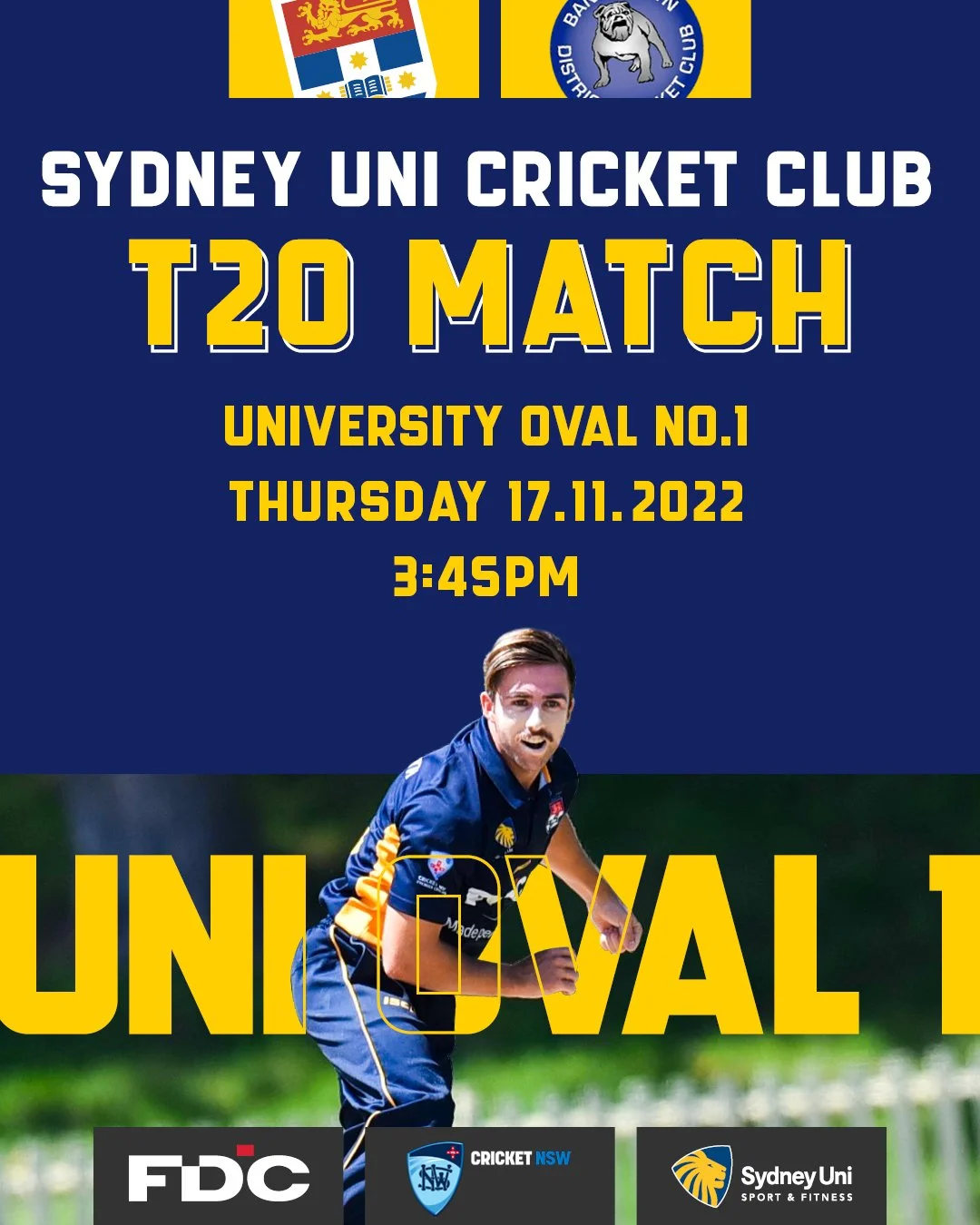
Our First Grade side will be playing a T20 on Thursday the 17th of November at 3:45pm.

Having won their first three games, the boys are undefeated so far this T20 season and hope to make it 4/4 after this top of the table clash with Bankstown!

Get down to Uni Oval No. 1 for what is set to be an entertaining match!

Hartley Anderson's 80th Birthday

Hartley Anderson's 80th Birthday

Hartley Anderson’s 80th Birthday celebrated with:

L to R - Ted Le Couter, Damon Ridley, Peter James, Hartley Anderson, Pam Anderson, Ian Fisher, Ron Alexander