TRUMPER AND SUCC

TRUMPER AND SUCC


                                                                               TRUMPER AND SUCC


Last Wednesday at Trumper Oval in Paddington, a small group of devotees gathered to mark the birthday of Victor Trumper who was born on 2 November 1877, 145 years ago.

Trumper played Grade Cricket on the ground which has been  named after him since 1931. He also played at Chatswood Oval where the Trumper Pavilion has been named after him since 1924. And he played for Australia and NSW at the SCG where the grandstand which has replaced the old ‘Hill’ has been  named, since 2008, in Victor Trumper’s memory.

What’s his connection with SUCC?

Apart from sharing a birthdate with SUCC stalwart, Hartley Anderson, Trumper’s legacy lived on in the person of Eric McElhone who played with him for NSW and against him for University in the early 20th century. Mr McElhone, even into his nineties, was still celebrating Trumper’s peerless life as one we should aspire to and was writing insistently that Vic was “the most beautiful batsman.”

The clock on the Grandstand at No1 Oval is called “Victor” as it replicates the famous photo of Trumper leaping out to  drive.

But, did you know that Trumper played for our Club?

Well, not quite.

But  Charles Robert Trumper (1924-1986), son of Victor’s youngest brother, Charles Ernest Love Trumper, and a  nephew of Victor, played one season for SUCC in 1946-47.

He had played for Gordon CC from 1940 to 1943 without a great deal of success but he did play 1st Grade in 1942-43 (99 runs @11. two wickets @43)

In 1946-47, when he was studying Law at Sydney University, he played his only season for the Club, mainly in 2nd Grade (111 runs @8.7. 11 wickets @45.6). The 2nd Grade side, ably captained by Bob Norton, won only two games. Trumper’s best figures were his 2 for 23 against Petersham in round 8. His highest score in 15 innings was 28.

“Charlie Trumper never found his true form save for a fleeting glimpse in the last few games”, wrote Bob Norton.

Charlie discontinued his studies and returned to Gordon where he played until 1950 in 3rd and 4th Grades. Until he died in 1986, Charlie lived within easy walking distance of Chatswood Oval where his famous uncle, who had died nine years before Charlie was born, played out his last days before succumbing aged 37 to kidney disease, far too young.

Charlie’s  uncle, Syd, another of Victor’s brothers, was Chairman of the Gordon General Committee.  Two weeks after a monthly meeting in January 1956 he died suddenly.

He had a long playing career with Gordon beginning in 1909 and was on the Executive Committee of the NSWCA when he died.

Comparisons with the famous Victor were always going to cause his relations to live in his shadow.

Victor’s youngest son was Charlie’s cousin (also named Victor, 1913-1981). He played for Manly and represented NSW in  seven games as  a left arm opening bowler who took two wickets in his first over in Shield cricket against Queensland in 1940-41 but they were two of only 12  1st Class wickets that he took. His 10 innings produced 74 runs.

The burden of the surname became such that Victor’s grandson (Victor jnr’s son), played for Gordon during the 1960s under another surname, Turner.

James Rodgers
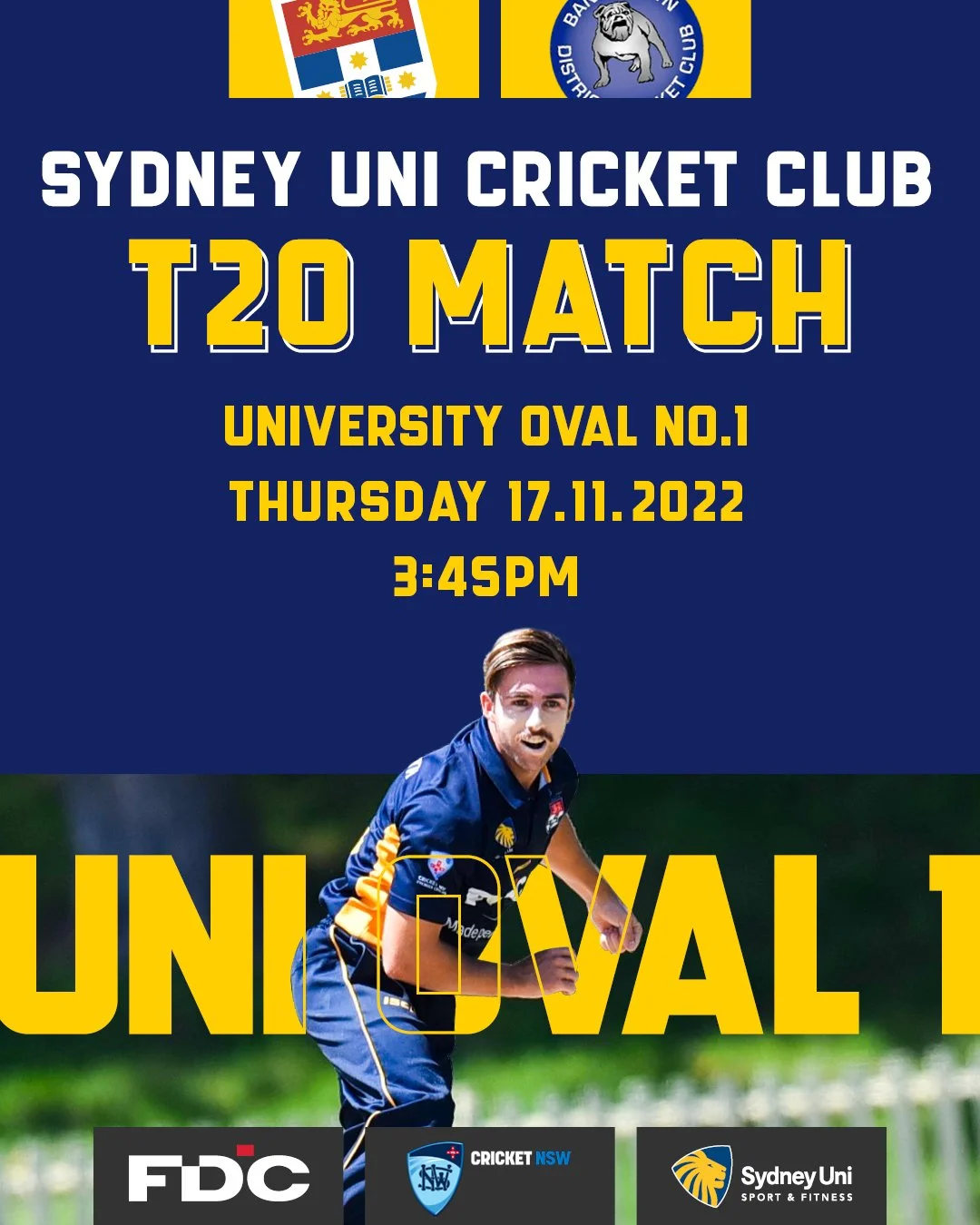
 

THURSDAY AFTERNOON T20 AT UNI OVAL NO. 1

THURSDAY AFTERNOON T20 AT UNI OVAL NO. 1

Our First Grade side will be playing a T20 on Thursday the 17th of November at 3:45pm.

Having won their first three games, the boys are undefeated so far this T20 season and hope to make it 4/4 after this top of the table clash with Bankstown!

Get down to Uni Oval No. 1 for what is set to be an entertaining match!

Hartley Anderson's 80th Birthday

Hartley Anderson's 80th Birthday

Hartley Anderson’s 80th Birthday celebrated with:

L to R - Ted Le Couter, Damon Ridley, Peter James, Hartley Anderson, Pam Anderson, Ian Fisher, Ron Alexander

   THE GILTINAN FAMILY

THE GILTINAN FAMILY

The surname ‘Giltinan’ is most easily recognised as the name of the shield presented to the Minor Premiers of the NRL Competition.

From 1951 until 1996, the handsome JJ Giltinan Shield was won by the 1st Grade team that won the Grand Final.

Since 1997, the Shield has been awarded to the NRL 1st Grade side that wins the Minor Premiership.

In 2022, that side was the Penrith Panthers and the Shield was presented on 26 August after the Minor Premiership was concluded. Penrith also won the Grand Final on 2 October when they were presented with the ‘Provan-Summons Trophy.’

But who was JJ Giltinan?

James Joseph Giltinan (1866-1950) was the eldest of five sons.

On the night of 8 August 1907, at Bateman’s Hotel in George Street Sydney, JJ Giltinan was elected Secretary of the newly formed NSWRFL which had broken away from Rugby Football in NSW. Victor Trumper was elected Treasurer.

Giltinan then invited the New Zealand ‘All Golds’ Rugby League team to tour Australia on their way to Great Britain in 1907. Then, after the first Rugby League premiership season in 1908, Giltinan led the first ‘Kangaroos’ Rugby League tour of Great Britain.

He was Honorary Secretary of the NSWRFL from 1909 until just before his death in 1950. The ‘JJ Giltinan Shield’ was instituted in 1951 in memory of one of the founders of the game.

Just a month or so after the first Rugby League season had concluded with South Sydney as Premiers, the 1908-09 Sydney Grade Cricket season began. Playing for Sydney University’s 2nd Grade side was Richard Giltinan (1881-1948), JJ’s youngest brother who was studying Arts at Sydney University as an evening student, preparatory to taking up a position as a secondary school teacher. He had previously played three seasons for Leichhardt and had batted steadily in 3rd Grade before promotion to 2nd Grade. His last innings of significance was his 46 against University in 2nd Grade in 1907-08.

For his new club, he scored 14 in his first game against Balmain but that was to be easily his highest score for the Club in 2nd Grade. Two more games produced 5,0, and 2. His bowling was used sparingly and he took no wickets. Inevitably, he was dropped to 3rd Grade where he made some moderate scores before reclaiming his 2nd Grade spot for a late-season game against Paddington. He failed to score in both innings.

He had played his last game for SUCC.

He was appointed to schools in Lismore and Grafton before becoming Headmaster of Wagga High School from 1926 until 1936. He died in Wagga in 1948.

Before that, JJ Giltinan appears to have played a few 3rd grade games for Burwood in 1908-09.

He may not have been much of a cricketer but he was a 1st class umpire.

In the 1903-04 season, the MCC side under Pelham Warner, was touring Australia. When they played NSW at the SCG from 12th to 15th February 1904, the appointed umpires were William Gregory Curran and James Joseph Giltinan. Curran was significantly experienced and he was to umpire two Tests some seasons later. Giltinan, however, was umpiring his first 1st class game. And his last.

The NSWCA attempted to appoint JJ Giltinan to umpire the 4th Test starting in Sydney on 26 February. There was an uproar. England’s RE Foster kept a tour diary which contained some strident opinions. On 23 February, he thundered:

           Dispute over umpire for the Test. NSWCA appointed Giltinan. Quite the worst umpire we have met. Deadlock…We shan’t play unless they give way.

AE Knight sent regular reports on the tour to the Sheffield Daily Telegraph. His opinion on the appointment was relatively subdued:

         On our return from Bathurst, we found the cricket atmosphere much disturbed by the umpire difficulty…Noble [the Australian captain] and Warner both agreed that Crockett and Argall were the two most satisfactory umpires for the Test Match but the NSWCA appointed one to whom Mr Warner strongly objected on the grounds of inexperience and lack of the necessary ability.

In the event, the NSWCA backed down. The Test went ahead as scheduled. Philip Argall and Bob Crockett were the appointed umpires.  Giltinan umpired no more at this level.

JJ Giltinan had his administration of Rugby League from the founding days and his later interest in Sailing to soften any wounds he felt from what the English players thought of him.

And, he has a Shield named after him.

RP Giltinan had his profession as a schoolmaster to attend to after his moderate returns when he played just a few games of cricket with SUCC.

James Rodgers

     JACK FRANCIS CONNELLY: Cricketer, teacher, prisoner of war

JACK FRANCIS CONNELLY: Cricketer, teacher, prisoner of war

The 1941-42 SUCC Annual Report was a sombre account of a club bravely keeping just afloat during the dark days of World War II. Students had enlisted. Some were never to return. Others’ cricket careers were over.

In February 1942, Singapore had fallen. In April 1942, a RAF bomber had been shot down over Northern France. Only one of its crew survived the crash.

The 1941-42 Report’s editor, however, saw a glimmer of hope.

           “We were very pleased to hear that Jack Connolly (sic) has been reported to be a prisoner of war after being on the missing list for some time.”

The Mosman Cricket Club Annual of the same season, 1941-42, contained the same news: Jack Connelly was a prisoner of war.

This was Jack Francis Connelly who had been born at Petersham on 7 March 1909, the only son of George (1883-1948) and Florence Christine nee Muldoon (1881-1973) and the older brother of Sheila (1913-2004) and Patricia (1915-1988).

Jack Connelly played for the Mosman Baseball Club from 1927 when he helped set up the club. He had joined the Mosman Cricket Club in 1926. In 1936-37, he coached the Mosman Green Shield (under 16) side.

He was not yet 19 when he took up his first teaching post at Neutral Bay Public School in 1928, as an Assistant Teacher, earning only 145 pounds per year. He then taught at various schools around NSW without formal teaching qualifications before entering Sydney University in 1937 to study Arts. He eventually graduated BA in 1940.

In his first season with SUCC, 1937-38, he batted steadily and bowled medium pace in 2nd Grade and in the Inter varsity games against Queensland and Melbourne before he became SUCC 1st Grader number 286. His three innings in 1st Grade, however, produced only 14 runs. In 1938-39, now a member of the Club’s selection committee, he seems to have volunteered to captain the Club’s ‘District Colts XI’ or 4th Grade side. His 205 runs and 30 wickets were invaluable.  

In what was to be his final season with the Club, 1939-40, Jack placed himself in the 5th Grade side playing in the Municipal and Shire competition. He was involved generously in the Club’s administration as Honorary Secretary, delegate to the Sports Union, a member of the selection committee and President-elect of the AUSA for 1940-41. In 5th Grade, his batting flourished, dominated by 125 against Burwood, one of his four scores over 50 during the season, and he was a damaging bowler with 47 wickets including 9 for 51 against Northern District.

He never did take up his position with the AUSA.

By September 1940, Jack had enlisted at Mosman where he was living. He embarked in December, attached to the RAAF (Regimental number 402566) before serving with the RAF in 107 Squadron.

On 12 April 1942, at 12.21 hours, he took off from Great Massingham in a Boston III  W8355. The aircraft was hit by flak and was ditched in the English Channel. Three were killed, all Londoners. Sergeant Colin Frank Docherty (wireless operator), Sergeant Thomas Joseph Delaney (air gunner) and the 19 year old pilot, Sergeant Allan Sydney Hatton. Jack was the only survivor and he was taken prisoner (POW 106) and sent to Stalag Luft L5 at Heydekrug.

Jack was a prisoner for three years. He’s briefly mentioned by the 1943-44 Mosman CC Annual Report as being in a POW camp in East Prussia. Somehow, the 1944 edition of Wisden had a story of an extraordinary cricket game played by the prisoners.

           “Stalag Luft Prison Camp in East Prussia. Australia won a ‘Test’ match by 3 runs, the last English wicket falling to a wonderful catch off the last ball of the final over…that catch gave JE Connolly (sic), who was cricket secretary of Sydney University before the war, a match record of 13 wickets for 60 runs.”

Jack recorded his thoughts from Stalag 357-6 in January 1945:

             “As part of the alleged reprisal measure, they [the German authorities] stopped all organised entertainment and closed the library…Before that, we had put on a good many plays, arranged symphony concerts with gramophone records.”

He wrote about books that he had read as part of his keeping mentally alert by studying works such as Harold Laski’s Grammar of Politics.

He was released in April 1945, almost three years to the day of the crash and he reported to the Brighton Reception Camp. Within a few weeks, his weight had increased from 10 stone 8 pounds to 12 stone 4 pounds. He was gracious, writing:

            “No one could praise too highly the service authorities and the Red Cross for what they were doing for us ex-prisoners.”

Mosman’s 1944-45 Annual Report gives details of three Mosman CC cricketers who had been released:

Jack Connelly, Keith Carmody and Peter Pearson. Ten Mosman players died on active service, including Dr Llondha Holland who had also played for SUCC and who had been killed in May 1943 just off the Queensland coast when his Hospital Ship was torpedoed by a Japanese submarine, resulting in 278 Australians being lost at sea.

Jack arrived back in Australia. He resumed his teaching career at Yanco Agricultural High School and then at North Sydney Boys’ High in 1952 as a French Master. Ian Craig, the future Australian Test captain and Mosman player, wrote to Mr Connelly during the 1953 tour of England to reassure him that his French had improved.

Jack resumed his cricket career with Mosman.  Aged 45, he captained the 4th Grade side of 1953-54 for whom he took a hat trick during the season. By 1963 he was at Surry Hills. He married and spent some time overseas before returning to Australia where he died in Perth aged 76 in 1986, 43 years after the crash.

In the SUCC Annual Reports, however, the last mention made of the former SUCC Honorary Secretary and lower grade captain was in the 1941-42 Report which managed to spell his surname incorrectly.

Nevertheless, he had been given another chance of life.

If any of our readers knows any other details of Jack’s life, I would be most grateful to hear from them.

Gracious thanks to cricket historians, Ric Sissons and Alf James and to Hartley Anderson, Max Bonnell and Pat Rodgers for uncovering details of JF Connelly’s life.

JF CONNELLY. SUCC 1937-40

BATTING                                             BOWLING

1st Grade 3-0-?-14                             -

2nd Grade 9-3-49no-96                      13-332

4th Grade 15-2-37-205                       30-466

5th Grade 12-2-125-382                     47-557

ALL GRADES 39-7-125-697-21.8      90-1355-15.1

James Rodgers