SUCC Legends Convene

SUCC Legends Convene

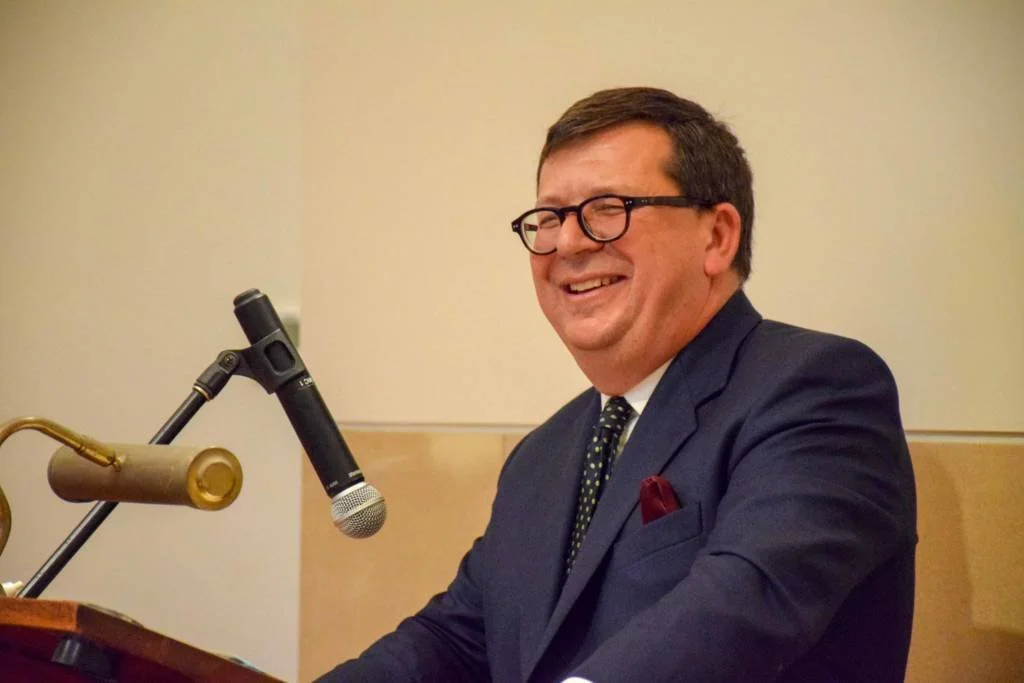
LEFT SIDE:

Rick Lee, Ron Alexander, Chris McRae, Rob Storey

RIGHT SIDE:

Peter James, James Rodgers, Rob Thomas, Peter Lewis, Ian Foulsham.

For the last 44 years, this group of 8 former players (sadly now without Dick Mesley who has died since and, last week, without Phil Scanlan who was away interstate) has met annually over lunch or dinner to remember their happy seasons (in the 1960s and 1970s) with the Club.

Last Friday, relaxation of covid regulations allowed them to meet for the first time since 2020.

As convenor, Rob Thomas (SUCC 1963-1977) was permitted three guests, Peter Lewis (baseball), Chris McRae and me.

Rob writes:


“As I have mentioned previously it is a unique privilege to play, to captain and to be involved in the administration and stewardship of the Sydney University Cricket Club and to get the benefits that flow through to life long  character, friendships and values.”

 James Rodgers

MIKE PAWLEY OAM: Remembers cherished times with the Club

MIKE PAWLEY OAM: Remembers cherished times with the Club

Mike Pawley played for SUCC for seven seasons from 1962 until 1969 during which he studied and graduated BSc, Dip Ed. During that time he took 234 wickets for the Club in 1st Grade as a left arm orthodox spinner. He’s ninth on the list of all-time wicket takers in Grade (Premier) cricket for the Club. After graduation, he went back to Manly and represented NSW in eleven games. From 1962 until 1983, Mike took 606 wickets at 16.4 in 1st Grade for his two clubs.

He is highly respected in NSW as a coach and sports store owner. In recent years, he’s done much needed and generous work in Cambodia among those who need us most.

In the last week, Mike has reflected on his time with University, a time which he cherishes.


“We have plenty to be grateful for through our participation in Sydney University Cricket.

The sheer joy of playing cricket on University Oval , and the innocent yet mischievous fun that was associated with that.

We played cricket for the right reasons then.

I hear from Bert Alderson [ his University 1st Grade captain] and Doug Alderson still.   Bert…now resides near Ballina where he has a morning coffee every day in the town square  if you are ever near there.   In his middle 90s (Bert turned 97 last December], he still has a sharp mind.   He was a very very good man , and Sydney University was so lucky to have him as its leader. 

When I look at the chapters of my life, those days in the early 60s shared with all of you and others still holds a very special place in my heart and in my mind.

happy days   Mike”

James Rodgers

ANDREW BELL APPOINTED THE 17th CHIEF JUSTICE OF NSW

ANDREW BELL APPOINTED THE 17th CHIEF JUSTICE OF NSW

(Image courtesy of St Paul’s College)

It is with great pride that the Club acknowledges Andrew Bell who will become the 17th Chief Justice of NSW when the current Chief Justice, Thomas Bathurst, steps down on 5 March. 

Andrew played for the Club and then the Veterans’ XI during the 1980s and 1990s and has always taken a strong and practical interest in the Club. 


He was educated at Sydney Grammar School before going up to the University, resident at St Paul’s College, having captained the SGS 1st XI in 1983. 

His academic career at Sydney University was filled with honours: BA, LLB Hons. Two University Medals. When he studied at Oxford University during his Rhodes Scholarship, he won the Vinerian Scholarship in the BCL and was also awarded a doctorate focusing on private international law. 

Since returning to Australia, Andrew has practiced as a barrister, is still an Adjunct Professor at Sydney University and was appointed as President of the NSW Court of Appeal in 2019. 


Francis Forbes was NSW’s first Chief Justice in 1823 and Andrew follows, 199 years later. 

He is only the second Chief Justice of NSW to have represented the Sydney University Cricket Club.  HV (Bert) Evatt, who played for the Club before the Great War, was Chief Justice from 1960 until 1962. 


The Club joins in saluting one of our most distinguished former players. 

By James Rodgers

Daniel Gauci selected for NSW U17 Combined Squad!

Daniel Gauci selected for NSW U17 Combined Squad!

Congratulations to Daniel Gauci who has been selected to represent NSW Combined U17 Squad at the National Championships!

The tournament will be held in Mackay, QLD from April 7 to 14 👏

Amy Ridley - Goalball

Amy Ridley - Goalball

      AMY RIDLEY CARRIES THE LEGACY … THROUGH GOALBALL!

 There was no ticker-tape parade to welcome back our highly successful Olympians and Paralympians.  Covid saw to that!  However, there was a LIGHT SHOW - https://www.nsw.gov.au/whats-happening/celebrate-tokyo-2020 which was streamed live on Sunday, 5 September, 2021.  As photos and videos of their activities were beamed in Aussie Green and Gold on the Opera House, there suddenly appeared “Amy Ridley Women’s Goalball”

Ridley is a name strongly associated with the Sydney University Cricket Club.  So, is there some connection between Amy Ridley and the legendary Ridleys who played with, and who contributed in so many other ways to, the SUCC?

I learnt that Goalball - https://en.wikipedia.org/wiki/Goalball is a game invented by Austrians and Germans as a sport for visually impaired returning soldiers after World War II.  I then found a 2 minute YouTube video -  https://www.youtube.com/watch?v=0bZ51jzmbAQ and became fascinated by the sport, and quickly realised why I had never heard about it. It is the only sport played in the Paralympic Games that has no other ‘equivalent’ Olympic sport.  Then, I found the connection with the Ridleys of the SUCC – Amy is indeed the daughter of Andrew, the niece of Nicholas, and the granddaughter of Damon.

However, Amy Ridley is blind.

Nevertheless, Amy has shown extraordinary resilience throughout her life. Year after year she was the top student at Turramurra High School and she is now studying Law and Economics at Macquarie University. She is an exceptional athlete who, in 2017, discovered her ideal sport, goalball. She has been greatly encouraged by her mother, Meredith, and her brothers, and, in a special way, by her father, Andrew.

 Amy, the youngest of the Australian Women’s Goalball team in Tokyo, represented NSW as a junior at the Australian Goalball Championships, and the Pacific School Games, and was a member of the Australian Team that won the silver medal at the Youth World Championships in 2019.   At the Tokyo Paralympics the team lost their first two matches, but narrowly beat Canada 4-3 in the next round.  This was the first Australian Paralympic win since Atlanta 1996!  Following their decisive win against the World Champion Russians, they made the quarter finals for the first time ever, but were beaten by Turkey, the subsequent Paralympian Champions.


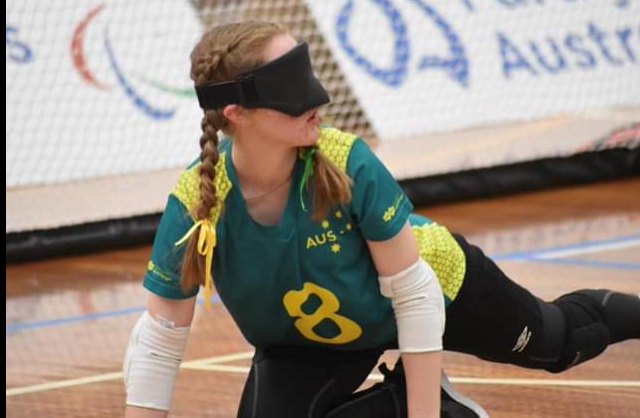
Amy Ridley playing at the 2019 IBSA Goalball Youth World Championships in Penrith, Australia

When she returned to Australia, Amy said “The best part of the Paralympics was being among so many disabled athletes,  and admiring and being inspired by how much they were achieving.”

Andrew Ridley, a dynamic left-hand batsman, followed his father, former 1st Grade captain, Damon Ridley, into 1st Grade in 1989-90.  Andrew eventually scored 2160 runs in 1st Grade and 5679 runs for the Club in all grades. His younger brother, Nicholas, scored 5229 runs for the Club.  Damon, Andrew and Nicholas between them scored 13,344 runs for Sydney University, a record without parallel. Nicholas’ academic record at Sydney University was simply remarkable. 23 High Distinctions, first class honours, the University Medal.

Andrew captained the Australian Universities of 1991, graduated with 1st Class Honours in Organic Chemistry and was awarded the Bradman scholarship for 1993 and studied at Exeter College Oxford. While at Oxford, he played twenty 1st class games, scoring 857 runs including a majestic 155 at Lords for Oxford University against the University of Cambridge.

Returning to Sydney, Andrew captained SUCC’s 2nd Grade and was Club Captain when the Club won its historic first Club Championship in 1999-2000, an achievement which gave him enduring satisfaction.

Since retirement from playing, Andrew has gained cricket and AFL coaching certificates, then he started coaching goalball.  He is now the Australian Men’s Head Coach, with the mission to develop the men’s squad for the 2032 Brisbane Paralympics.  Andrew admits: “a lot of my coaching references cricket.”  And to exemplify, he explains that he gets his players to ‘listen’ to the ball from the time it is released. This is the same skill which Andrew honed-in ‘watching’ the ball from the bowler’s hand. “Stability, balance and alignment” are skills preached in cricket which Andrew has used in his coaching of the visually impaired.  

He explains further: “The visually impaired talent pool isn't big to start with, and then it is split between the likes of Blind Cricket, Blind Tennis, Blind Football and the other Paralympic Sports.  Goalball takes a certain type of person who is happy to play reverse dodgeball with a 1.25Kg ball that is hurled at you from around 10 metres away at 60Kph.  When Amy throws a ball at me at 20Kph, which is about half pace for her, it hurts!”

“These other visually impaired sports have obvious connections with mainstream sports who are more and more realising the value of being seen to be inclusive.  Couple this with the fact that Australia’s employment rate for people with disability is just 47%, which is in line with the Aboriginal & Torres Strait Islander employment rate of 46%, and with goalball being unfunded, then you can see how easily talented sports people can be drawn to the sports backed by the likes of Cricket Australia and Tennis Australia.  

 “Paralympics Australia funding is limited to high performing teams, hence the Australian Men's Goalball program in particular is stuck in the vicious cycle of lack of funding inhibiting any ability to prove that they are worthy of being funded.  Having said that, I think I can make a difference with my coaching and with a new generation of players who will start to develop over the next couple of years - that is why I put my hand up to be Australian Men's Head Coach.“ 

 For players, by far the main cost is in travelling to national camps and to competitions, and traditionally the expenses of coaches, physios and support staff costs are met by the players, so costs for each player are over $10,000 annually – not including trips to ophthalmologists, and surgeries (for example, Amy on average requires at least two eye operations per year). 

Perhaps because he was extensively involved with the SUCC, he realised that to have success, sporting teams need support in many ways, including strong management, scholarships to players, and an adequate funding base, so Andrew is actively seeking sponsorship for all aspects of the Australian Men’s Goalball Team.   “Visually impaired people have to climb their own personal mountains of hardship, so besides assisting my goalballers through coaching and mentoring, I am trying to help them become successful individuals, and as proud to pull on an Australian goalball shirt as Australian cricketers are proud to pull on the ‘baggy green’ ”.

Andrew is a fine example of a servant leader who puts his players and their welfare well ahead of his own.

Amy Ridley is an inspirational young woman who deserves any success that will undoubtedly attend her.

The Ridley legacy of excellence is in the safest of hands.

James Rodgers


A Singular Honour (Part 13)

A Singular Honour (Part 13)

By James Rodgers

(1 of 2 Medical Student Tales)

GL Saunders (SUCC 1 st Grade cap no179) is a minor footnote in SUCC’s sweeping history. He appears once and then virtually disappears, for ever.

He played his one game in 1st Grade in January 1919, one of 23 players who took the field with

University’s 1st Grade during the 1918-19 season; one of six who played their only game in 1 st Grade in that season. On 6 January 1919 (exactly 103 years ago today as I write), the world was still dizzy with elation following the Armistice in November 1918 which signalled the end of the dismal days of fighting in the Great War. Seventeen University cricketers never returned; six of the seventeen were still students when they enlisted.

George Lord Saunders (MB, ChM 1921) was a Medical student who fielded on the rain-affected first day while Glebe piled up 3 for 128. He wasn’t needed to bowl although University’s captain, Les Best, summoned seven others to the bowling crease. On the second day, the Australian Test player, Warren Bardsley, dominated and carried his bat for 138 out of 253. ‘Tim’ Yates recorded his best 1 st Grade figures with 5 for 35. Saunders had been one of two changes in the University side forced on the University selectors by the vacation. Jack Clemenger and University’s leading bowler, Ted Trennery, were both on holidays and Saunders and TP Flattery were called into the side. Flattery was a graduate of Waverley College and a future barrister and lecturer in Roman Law at the University.

Left hander Jim Bogle, a 25 year old Medical student, opened when University went in to bat. He top scored with 34 and Saunders, batting at number 11, was left 0 not out when the innings came to a sorry end. When University followed on, there was another collapse which left them 5 for 53. Curiously, Bogle didn’t bat again. His fellow Med student, Saunders, wasn’t required. The 1918-19 1 st Grade side finished a creditable seventh in the competition with six wins and six losses and two remarkable ties. In round 3, both Balmain and University had scored 327. In round 10, Waverley was 9 for 138 chasing 148. A series of nervous singles and wild swipes into the outfield concluded when University’s Jimmy Sullivan caught a ‘skier’ as Balmain’s Sheppard tried to hit University’s Charlie Lawes out of the ground. The University side was held together mainly by the batting of Jim Bogle who had an ‘annus mirabilis’ which he never repeated. In 1 st Grade, he scored an extraordinary 1090 runs at 83.8 with six centuries.

The next in aggregate was Les Donovan’s 433. Bogle’s 1090 was the first occasion when a University 1 st Grader had scored over 1000 for the season and it was to be the only time when Bogle himself ever approached anything like it. It took another 88 years before Greg Mail’s 1225 runs in 2006-07 broke this record. Since then, Damien Mortimer, Nick Larkin and Greg Mail, twice more, have surpassed Bogle’s old record and Greg Mail’s 1242 in 2009-10 is the current 1 st Grade record for SUCC. When Bogle, on the strength of his consistent and outstanding run-scoring, was selected for NSW a few weeks later in January 1919, he scored 145 on debut as NSW chased down 387 to defeat Victoria. He was not often available for NSW because of his medical studies but when he was called up again in the next season for the game against South Australia in Adelaide, he was dropped first ball and then ground out an extraordinary200.

The remarkable thing about Bogle’s 1090 was how much it stood out in his Grade career. In the other six seasons in which he played 1 st Grsde (for Glebe and University), he averaged a moderate 25.

The two unlikely teammates, George Saunders and Jim Bogle, were a year apart in the Faculty of Medicine. While Bogle was creating records almost every week on the cricket fields, Saunders returned to his studies and never played 1 st Grade again. And that’s where he disappears from sight. We know that his father, George, and mother, Grace, were married in 1893 and lived around Newcastle. We know that George had two brothers, Frank who served in the Flying Corps in the Great War and Charles. And that his sister Aimee lived until 1972.

But many questions remain unanswered.

Where did George go to school?

What sort of cricketer was he?

What sort of character was he?

What did he do after graduating in 1921?

If any of our readers have any ideas, I would be most grateful to hear from you about the Medical student who played one 1 st Grade game and who never scored a run or took a wicket.