A Singular Honour (Part 9)

A Singular Honour (Part 9)

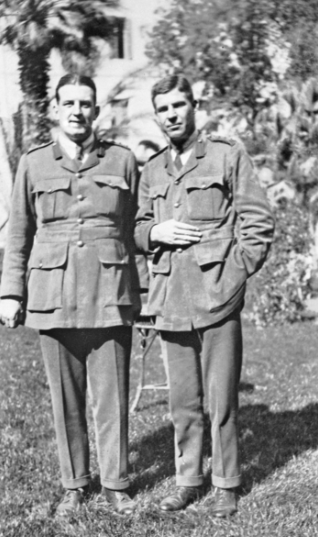
                                            HENRY GEORGE LEAHY (pictured right)

HG Leahy was one of a kind.

He had been born at Thargomindah, 1000 kilometres west of Brisbane in 1888 and he was educated at St Joseph’s College, Nudgee,  in Brisbane.

Just after the death of his father, John Leahy (1854-1909), Speaker of the Queensland Legislative Assembly, HG Leahy began medical studies at Melbourne University and represented  for a number of seasons as full back in the Victorian Rugby side. In the 1911-12 cricket season, he played two games in 1st Grade for Melbourne University against Melbourne, when he was bowled for 12, and against North Melbourne when he didn’t bat.

In 1913, he continued his medical studies at Sydney University and threw himself into University life with some relish. He played competitive Billiards, was a 1st Grade baseballer and was Boxing Secretary of the Athletics Club. The gold medal that he won as welter weight champion in 1914 was later stolen from his home in Bridge Road Glebe and was, apparently, never returned. In the intervarsity boxing team of that year he knocked out his opponent from Melbourne.

He had moved from rural Queensland to Brisbane to Melbourne and then Sydney before he represented SUCC. In 1914-15, he is listed as playing in 2nd and 3rd Grades and it is known that he played 2 innings for 31 runs in 2nd Grade.

In round 1 of the 1915-16 season, HG Leahy was selected in a vastly under-strength University 1st Grade side to play Waverley at University Oval (1st Grade cap no143). Many undergraduates had enlisted and the Club’s golden era was behind it. 1st Grade had been Premiers in 1913-14 but in 1915-16, only CR Campling remained from that great side. Nevertheless, University’s first day of the new season was promising. Les Best’s 69 ensured that University would post a competitive total and HG Leahy, coming in at number 8, “batted confidently and crisply” before being caught from Ward for 26. Stubborn partnerships on the second day took Waverley past the University total six down.

For Waverley, 19 year old Norman Callaway made 61, the first innings in a productive 1st Grade season that produced 705 runs at 58.5. In February 1915, he had made his debut for NSW against Queensland at the SCG. Queensland was disposed of for 137 but NSW was 3 for 17 when Callaway joined University’s Frank Farrer. At stumps Callaway was 125 not out and on the next day he went on to a scintillating 207 in 214 minutes with 26 fours on a slow outfield. This was to be his only 1st class match and the last interstate match before the Great War caused the cancellation of games. At the time, he was only the second to score a double century on 1st class debut. Later in the 1915-16 season, he enlisted and he was killed at the Second Battle of Bullencourt on 3 May 1917. He has no known grave. He was the first of only three NSW cricketers killed in the Great War. Dr Gother Clarke died on 12 October 1917 and the Australian fast bowler ‘Tibby’ Cotter on 31 October 1917.

HG Leahy enlisted in March 1916 just after graduation at about the same time as Calloway. But Leahy was aged 28, a medical doctor promoted to Major who served in Egypt, Palestine and Beersheba. He returned to Sydney in 1920 after post graduate studies in Surgery in London after the Armistice.

On the card detailing his war service for the Sydney University Union records, Dr Leahy wrote emphatically: “No wounds. No ailments. No regrets!”

He set up practice in Macquarie Street in 1921 but persistent heart trouble forced him to less intense practice at Barmedman by 1939. The young surgeon played golf and contributed pieces for ‘The Bulletin’ and ‘Smith’s Weekly’.

But he had apparently played his last cricket game in 1916 and he died at Temora on 1 April 1940, aged only 52.

He had played once for University in 1st Grade. One innings for 26. And he crossed paths briefly with the tragic Norman Calloway.

There are lingering questions:

1.       Why did he start Medicine at Melbourne University and then transfer to Sydney?

2.       Does he have any descendants? He was the only son but he had four sisters.


Acknowledgements to Max Bonnell.


James Rodgers

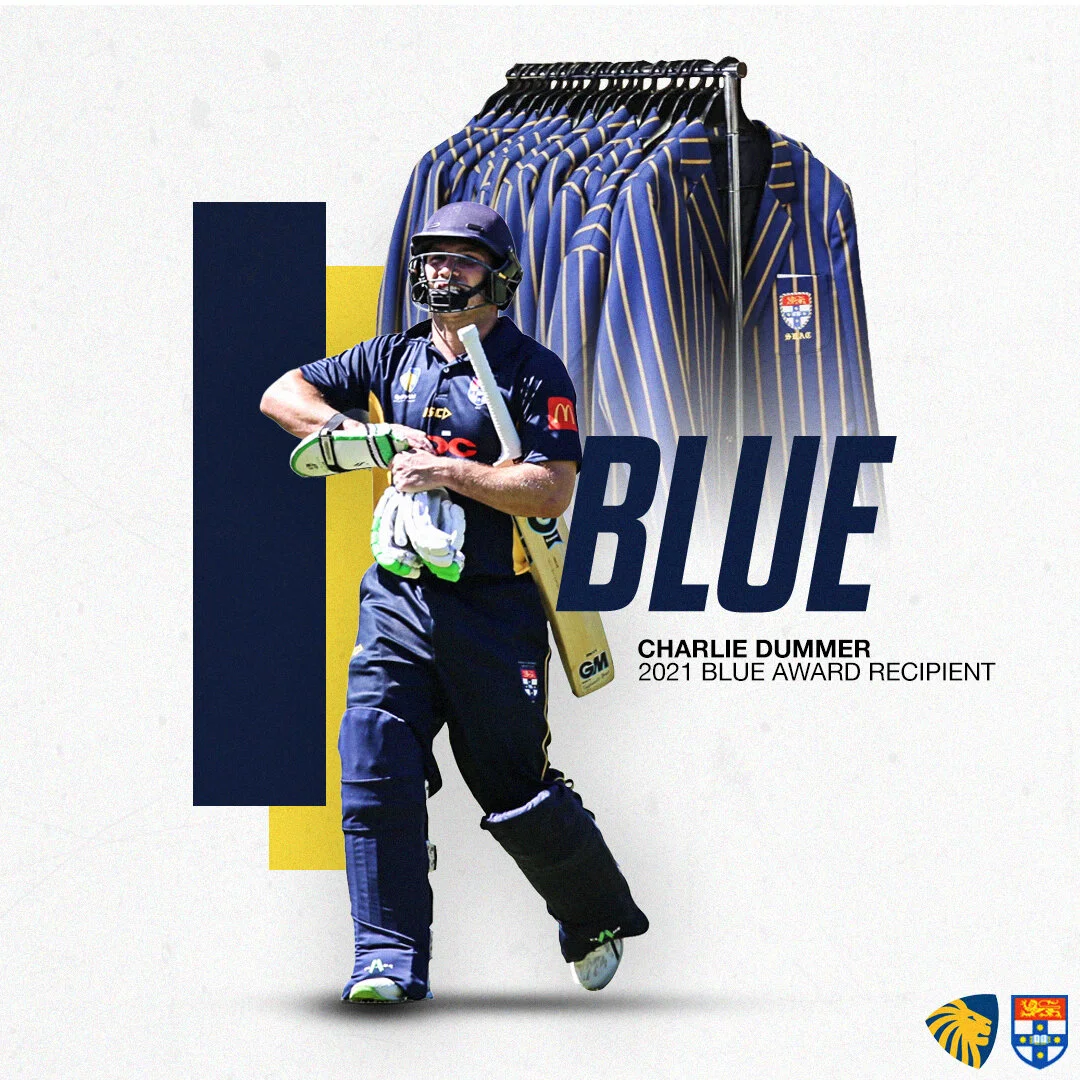
Blue Award - Charlie Dummer

Blue Award - Charlie Dummer

2021 Blue Award - Charlie Dummer

This award recognises student-athletes who have excelled academically while achieving outstanding results in their sport at the highest level.

Charlie was ready to fire from the get go, notching a half-century at more than a run a ball in his first innings of season 2020/21.

It seemed to only get better for the opening batsmen as he finished the season with 6 half-centuries and a massive 666 runs!

With the first round of the 2021/22 season just around the corner, Charlie is ready to pick up where he left off!

A huge congratulations on achieving this award! Let’s go again this season.

A Singular Honour (Part 8)

A Singular Honour (Part 8)

                                                              TP STRICKLAND 1875-1955

When you next visit Melbourne and when you next hop on a Melbourne tram, tip your hat to Tom Percival Strickland.

His senior cricket career was brief and mostly insignificant but he straddled the old ‘Sydney Club Cricket’ competition and the revitalized ‘Sydney Electoral Cricket’, the forerunner of Grade Cricket or Premier Cricket.

Aged 17 and recently enrolled in Engineering at Sydney University, Strickland appeared twice in the University 1sts in 1892-93, the last season of Club Cricket, and one more time in 1893-94, at the dawn of Electoral Cricket. (1st Grade cap no17). His four innings in the 1sts realized just 14 runs: 6,4,0 and 4. He played no more at that level. He achieved more, however, outside the boundaries of the cricket fields.

From 1887 until 1893, he had flourished in the classrooms and on the cricket fields of Sydney Grammar School.

In the 1891-92 SGS 1st XI, he batted early in the order. But for “nervousness”, he “would have been one of our best batsmen.” He played straight drives crisply and cut the ball sweetly. In 1892-93, just before going up to the University, he again opened the batting for SGS and in a low-scoring season, he was considered the best batsman in the school.

In the Matriculation Exams of 1893, he achieved Class I passes in Latin, German and French and Class II in Maths. Armed with three scholarships and a Gold Medal for Proficiency at the Senior Examinations of 1892, he enrolled in the Department of Engineering.

His family lived at the majestic sandstone home, ‘Dun Aros’ in Crescent Rd Manly. While he had two sisters, he was the only son of Annie (nee Mason) and Thomas Arthur Strickland 1835-1888, a Sydney merchant, partner in Young and Lark in Moore St. His father’s tragic death, drowned in a boating accident outside North Head on Sunday 3 June 1888, forced 12 year old Tom into becoming ‘head of the house.’ Mr Strickland had left home with a ‘servant’ early in the morning to go fishing in a dinghy. A sudden squall overturned the boat and, even though he was a strong swimmer, Mr Strickland drowned as he struck out for shore to get help for his servant. Tom was required to give evidence before the Coroner’s Court which convened a few days later.

Tom went back to school, now responsible for his widowed mother and his sisters and he responded with maturity in his studies and with increasing prowess on the cricket fields.

When a Manly side of 22 was selected to play at Manly Oval against the touring English Test side captained by the formidable WG Grace just before school resumed in February 1892, 16 year old Tom was chosen. But he was bowled by the left arm slows of Bobby Peel for 0. Peel was to take 1754 wickets in 1st class cricket and 102 wickets in only 20 Tests before misbehaviour under the influence of alcohol all but terminated his career. Manly’s XXII scraped together 98 and the Englishmen won comfortably. What stories might Tom have told his Grammar classmates at College Street when he returned to school? He’d played against the legendary WG and had faced the enigmatic Bobby Peel.

His reputation as a cricketer reached the University selectors who chose him in the 1sts’ side to play Carlton in March 1893 when he had just begun attending lectures. The University 1sts were held together only by the consistency of their veteran captain, Tom Garrett. On University no1 Oval, TP Strickland batted at number 8 and made 6 but Garrett’s 90 was more than half the total.  Carlton replied promisingly at first but Garrett’s damaging bowling earned him 6 for 30 and University led by 72. When University batted again, Strickland batted at first drop but was bowled for 4. Nevertheless, he was selected for the next match, against Belvedere. This time, University’s collapse, was complete. Garrett made 1. No one got to double figures and University were knocked over for 31. Strickland was out for 0. When Belvedere reached 0 for 60, rain set in a reduced University’s misery  to a 1st innings loss only.

Strickland prospered in Civil Engineering and prepared for another cricket season. 1893-94 was the first season of Electoral Cricket but this did not seem to affect the University side significantly as they were able to select students, graduates and some who were neither. When 18 year old TP Strickland was chosen for the round 3 match against East Sydney at the SCG, he took the field behind 35 year old Tom Garrett and some other older undergraduates such as the 22 year old Engineering student Norman White.

Again he batted at 8; again he failed with 4; again University was bowled out cheaply, for 136. But something different happened. On the second day, Easts lost their last 7 for 30 (Garrett 5-34) and University had a slender lead which they had increased to 254 when stumps were drawn. 3rd Year Medicine student, Erskine Robison was 113 not out, University’s first century in Grade Cricket. He was to die only six years later while working in a TB sanitorium in Germany. The third day was washed out and University remained the only side to defeat the Premiers, East Sydney.  Strickland had played his last 1st Grade game but he continued to score runs in 2nd Grade and to act as Honorary Secretary of the Club for two seasons and to play tennis and to win glittering academic prizes, When he graduated, B Eng in March 1897, it was with 1st Class Honours and with the Gold Medal.

He was awarded a scholarship to McGill University in Montreal where he earned a Masters in Science before working for some time in New York. Returning to Sydney in 1902, he was appointed Assistant Engineer of the NSW Government Railways and Tramways and he married Gertrude Emily Hayes 1875-1961. They were to have three daughters.

From 1921 to 1938, Strickland was Chief Engineer of the Melbourne and Metropolitan Tramways Board. He inherited a ramshackle 216 trams with an astounding 21 different designs and he set about designing a new standard tram. The ‘W Class’ tram was in operation until 1969 and a successor the ‘W8 Class’ which survives.

He made just 14 runs in 4 innings for University 1sts and he played just one ‘1st Grade’ game but when he died aged 79, many Melbournians tipped their hat to him.


JAMES RODGERS

A Singular Honour (Part 7)

A Singular Honour (Part 7)

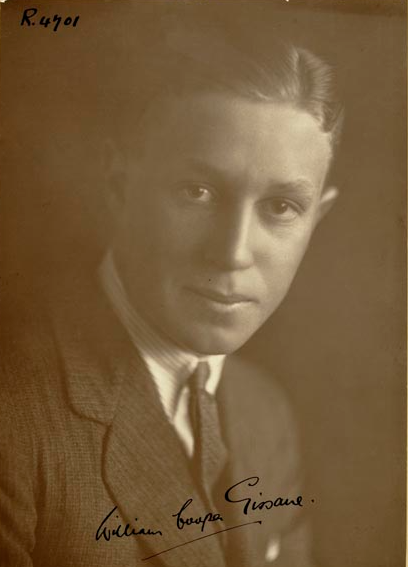
Professor WC Gissane CBE lived and worked for most of his adult life in England, from 1927 until his death 54 years later.

From 1941, he was the first Clinical Director and Surgeon-In-Chief of the Birmingham Accident Hospital where he did invaluable work in reducing the number of road and industrial accidents. A medical device was even named after him. ‘The Critical Angle of Gissane’ helps determine the presence of a calcaneous fracture on a lateral foot x-ray on a radiograph. From 1964, he was Honorary Professor of Accident Surgery and, in recognition of his services to Medicine, he was awarded the CBE (Commander of the British Empire) in 1964. He was a Vice President of the Warwickshire County Cricket Club.

In Sydney, he had played one 1st Grade game of cricket.

Or had he?

He had been born in Redfern on 26 April 1898, the son of a tea merchant, and he completed his school education at St Ignatius’ College Riverview from 1915 to 1917. He was appointed one of five College Prefects and was a confident speaker in the debating teams. He played for the 1st XV Rugby team as a winger and for the 1st XI cricket team as vice-captain and a batsman/keeper. In the 1st XV competition, Riverview finished second, beaten only by Sydney Grammar, and fair haired Gissane earned praise for “handling and kicking” and criticism for being “weak at tackling.” He was small in stature but was to grow to 5 feet 9 inches over the next few years. In the 1st XI, captained by Jim Sullivan (1899-1993), a future Sydney University player, Gissane was a reliable batsman early in the order and his figures were creditable, 491 runs @32. Both Sullivan and Gissane were selected for the Combined GPS 1st XI that played Sydney University in December 1916 on University no1 Oval in front of a few hundred spectators. The GPS side was thoroughly outplayed as University rattled up 8 for 288 in reply to the GPS total of only 110. Gissane, batting down the order, shaped nicely for 11. University’s rather casual attitude drew sharp comment from The Referee. The University players were inexcusably late back from lunch and had left the schoolboys and the umpires waiting. Gissane kept wickets untidily.

Nevertheless, when Gissane came to study Medicine there, he turned out for the Club’s 2nd Grade in 1919-20 where he scored steadily, 173 runs @21.6, including a commanding 74 against Randwick. He also represented the Sydney University Football (Rugby) Club’s 2nd Grade side. From then on, his appearances in the University teams were confined mainly to 2nd and 3rd Grades where, in cricket, he scored some runs regularly and even took up bowling with some success in 3rd Grade. He worked diligently at his studies.

When Malcolm Jagleman was unavailable for the 1921-22  game on 8-15 October, Gissane was summoned to University no1 Oval to keep wickets for 1st Grade against Balmain (SUCC 1st Grade cap no190). The first day was affected by weather and Balmain batted strongly to go to stumps at 2 for 86. Gissane took the first catch from the bowling of Albert Kendall when the future Test player, ‘Hammy’ Love, snicked one. On the second day, Balmain collapsed for 143 and University batted out the day to finish at 9 for 243. Ray Boyce (76) and Max Hesslein (74) led the way but Gissane, batting at number 9 was bowled by Storey for 2.

Gissane went back to 2nd Grade and then 3rds and onto graduation and to England where he did further studies, practised Medicine and  married a nurse, Marion Dorothy (nee Mason), in 1938. They were to have one son, William (1940-2015) who became a chemical engineer.

What hasn’t been realized until recently was that before brief war service and before beginning studies in Medicine, Gissane had actually played two other 1st Grade games. But not for University! In March 1918, when he was living in Auburn, he played for Wests against North Sydney and batted at number 3 on his 1st Grade debut before being bowled by the ageless Clarrie Hogue for 11. Then, next week, against Sydney, Gissane was caught for 6 and that was the end of his 1st Grade career with Wests. 2 innings, 17 runs.

Seven months later, Gissane enlisted in the AIF at South Head. He had grown to a size where he was to box in the light heavyweight division at University. The Armistice was signed two weeks after Gissane enlisted and he soon swapped his military uniform for an academic gown.

Jim Sullivan admired him. Years later, he referred to ‘Bill’ Gissane as a “tidy cricketer”, a “good cobber” and a “smart cove.”

One footnote to his brief 1st Grade career was that he came up against two of the most enduring slow bowlers who have ever played in Australia.

When he made his 1st Grade debut for Wests in 1918, he was bowled by North Sydney’s Clarrie Hogue who was then less than half-way through his astonishing career. Hogue had first played in 1887 and he was to continue to play for 72 years until finally putting his creams away in 1959.

When Gissane played his one 1st Grade game with University in 1921, the peripatetic ‘H Ironmonger’, who had come up from Victoria at the start of the season, opened the bowling. This was ‘Bert’, ironically nicknamed ‘Dainty’, Ironmonger who consistently claimed to be younger than he really was. During the 1921-22 season, he turned 39 but was yet to play Test cricket where he took 74 cheap wickets. When he played the last of his 14 Tests for Australia in the infamous ‘Bodyline’ series of 1932-33, he had already, extraordinarily, celebrated his fiftieth birthday. He played on in club cricket at a reasonable level until he was 60.

Jim Sullivan ensured that Bill Gissane, his classmate and teammate, was not to be forgotten.

Here is a little more about a man who played one 1st Grade game for University in a remarkable career of service.

JAMES RODGERS

A Singular Honour (Part 6)

A Singular Honour (Part 6)

  AMBROSE WILLIAM FREEMAN 1873-1930

In 1941, as the war in the Pacific edged ever closer to Australia's doorstep, a widow donated a stately family country home, Berida in Bowral,  to the Red Cross for the use of convalescing Australian servicemen.

Doctor Jessie Strathorn  Aspinall (1880-1953) married Ambrose William Freeman (1873-1930) in 1915 and from 1925, they lived with their four children at Berida, 6 David Street, Bowral. One of their granddaughters was named Berida.

From 1990, Berida with its 43 guest rooms, adjacent to Berida Golf Club, has been known as Berida Manor or Berida Hotel.

The Freeman family was clothed in mourning during the Great War. Six weeks before Jessie and Ambrose were married by Jessie's father, Reverend Arthur Ashworth Aspinall (1846-1929), the first Principal and co-founder of The Scots College in Sydney,  one of Ambrose's brothers, Douglas, was killed at Quinns Post, Gallipoli on 3 May 1915, the week after their cousin, Colonel HN MacLaurin, was killed at what is now known as MacLaurin's  Hill.

In September 1917, Jessie's youngest brother, a medical doctor, Captain William Robert Aspinall MC, aged 24, was killed at Ypres while attending to a wounded soldier.

Service and duty and sacrifice were never far from the family. Jessie Aspinall had graduated MB ChM from the University of Sydney in 1906. Her appointment as the first female Resident Medical Officer at Royal Prince Alfred Hospital had been initially refused by the RPA Board who were forced to relent when newspaper editorials and correspondents railed against the injustice of their decision.

Ambrose Freeman, second son of William Freeman, one-time President of the NSW Land Court, was educated at Newington College and the University of Sydney. He graduated BA 1896 and BEng (Mining and Metallurgy) 1904. He and an older brother owned tin mines in the Malayan States. On a trip back from Malaya in October 1930, he fell fatally ill and was buried at sea.

Ambrose's richly varied life had portentous episodes and brushes with fame. He had been a 1st grade cricketer for exactly one game - for Sydney University against Sydney CC at Rushcutters Bay Oval in October 1902. He took no wickets in the Sydney first innings, made 0 not out batting last in University's faltering reply and then, entrusted with the ball for a few overs in Sydney's second innings, he had Quist stumped by Edgar Waddy for 37.

We are talking of Karl Hugo Quist (1875-1957), a batsman with three States (NSW, Western Australia and South Australia), father of Adrian Quist (1913-1991), the Australian Davis Cup player, once ranked third in the world. Freeman played no more. His recondite statistics: one first grade game, no runs, one wicket.

Between degrees, Freeman worked on the Western Australian goldfields. He had business dealings with an engineer who became the thirty-first President of the USA, Herbert Hoover.

At Sydney University he was an inveterate organiser amid the insouciance of university life, variously Honorary Secretary of the Rugby Club, St Andrew's College Ball Committee and the Grounds Committee of the Sports Union. He was also a Vice President of the Undergraduates' Association in 1903.

Did he have a famous connection with Bowral before he and Jessie built there in 1925? Or was there just a coincidence in surnames?

Ambrose's father was William and his grandfather was Henry. Earlier genealogical family details seem to peter out there.

Was he related to another William Freeman (1770-1820), an English convict who had been transported to NSW in 1792? William married another convict, Elizabeth Chaffrey (1780-1816). They produced seven sons and Lucy (1804-1827), their only daughter.

Was Ambrose Freeman's grandfather Henry the son of one of the seven sons?
Lucy married William Augustus Cupitt (1797-1866).  Either before Lucy died or just after, William took up with and eventually married Rebecca Charlton and they moved to Mittagong. The historians, Bernadette Mahony and Rodney Cavalier, first established that one of Rebecca's and William's children was Mary Cupitt (1827-1871) whose extra marital affair with Emmanuel Neich (Danero) (1807-1893) produced Sophia Jane Cupitt (1846-1926), the grandmother of Don Bradman. See Between Wickets (Summer 2014-15).

Sophia married William Whatman. Their sixth child, Emily, was Don's mother. Neich's first wife. Mary Ann Comer, was the daughter of a convict, James Comer.

In 1925 when the Freemans were moving into Berida in David Street, another family had just moved from 52 Shepherd Street to 20 Glebe St, just a few minutes' walk from each other. This was the cricket season when 17 year old Don Bradman, playing for Bowral against Wingello, scored an astounding 234, batting against his future Australian teammate, Bill O'Reilly.

Were Ambrose and Don related? Ambrose Freeman played one first grade game. Don Bradman was statistically the greatest cricketer the world has known. Don was a great great grandson of William Cupitt, the first husband of the  daughter of William Freeman, a convict.

Was Ambrose the great great great grandson of the convict William Freeman?

               We may never know.

              But he did play one 1st Grade game with Sydney University.


                            JAMES RODGERS

A Singular Honour (Part 5)

A Singular Honour (Part 5)

Percy Brereton Colquhuon 1866-1936


In tumultuous political times in NSW during the first two decades of the twentieth century, on the conservative side of politics, lawyers with established connections were seen as ideal managers of parliamentary business and as representatives of the people.


Australian political parties of the first decade of the new century, however, were fluid rather than exclusively tribal entities. Amalgamations, alliances, mergers, coalitions were all common. Changes of name and various iterations abounded.


Candidates for the conservative parties in NSW benefited from friendships, alliances and connections. Sporting ability was considered especially useful. Birth into well-connected families was a distinct advantage.


Charles Gregory (known as Greg) Wade (1863-1922) led the Liberal Reform Party for ten years after Joseph Carruthers’ resignation because of ill-health. Carruthers himself had been a useful cricketer and was associated with the Sydney University Cricket Club. A Gladstonian Liberal, Carruthers had revitalised the Liberals by adopting some of the ideas of the right wing Peoples’ Reform League. Wade became the seventeenth Premier of NSW 1907-10. David Clune, pre-eminent historian of NSW politics, describes Wade as “a man of poor judgement and inflexible temperament . . . which cost him dearly at the 1910 election.”


Before the 1913 election, Wade, now in Opposition, sponsored a distinguished sportsman who stood for and won the newly-created seat of Mosman.


Wade and his new parliamentary colleague shared a number of similarities. Both were lawyers before entering Parliament. Both were from the comfortable, ruling classes. Born three years after his leader, Percy Brereton Colquhuon (1866-1936) enjoyed established connections in Sydney society as the son of English-born George Colquhuon (1830-1901), NSW Crown Solicitor from 1894.

Colquhuon had been educated by a tutor at home in Maitland and then, when his family moved to Sydney, at St Paul’s Redfern, a school aligned with St Paul’s Church of England in the same suburb.  At Newington College Stanmore 1881-85 he captained both the 1st XI and 1st XV. In his early years he came under the influence of the Headmaster Joseph Coates (1844-1896) a towering figure of the Sydney University Cricket Club who had captained the NSW Sheffield Shield side, taking 76 extraordinarily cheap wickets in first class cricket. Coates’ ability as a sportsman endeared him to the boys at Newington and then at Sydney High School where he was also Headmaster.


Colquhuon played cricket and Rugby for Sydney University from 1885 but was not an undergraduate except for the two years he was enrolled in Arts I, 1885 and 1891 (when he was an evening student and also resident at St Paul’s College). Qualifications for the University sides were loose. Colquhuon took advantage of liberal interpretations while working by day for many of these years as an articled clerk to his father at Allen and Allen’s legal firm. He was admitted as a solicitor without taking a degree in 1891.


Although he had been a dominant cricketer at Newington, Colquhuon saw cricket as a mere pastime after school. He played irregularly in the University 1sts of 1885 and 1886 as a lower order batsman, before answering the call in February 1896 for one last and relatively successful appearance in 1st Grade against Cumberland when he scored 19 not out. This was his only game for the Club in the recently instituted ‘Electoral Competition’ and, thus, this was his only 1st Grade appearance. The team was short of numbers and Colquhuon happened to be in Sydney. Another Newington old boy, the former Test player, Tom Garrett, was captain. Colquhuon was available on the three Saturdays so he played  at the SCG, the ground on which he had won the 220 yards handicap race at the University sports in 1891.

University had been having a dismal season. Bowled out for 30 in Round 1 by Easts, the batting faltered in almost every game. In this game, University’s 151 owed much to Roley Pope, the former Test cricketer, who made 52. Colquhoun’s 19 was third highest score. But when Cumberland batted, Frank Iredale made 124 and his side won comfortably. Colquhuon was needed no more but things went from dismal to chaotic in the next game when three University players were ‘absent’ in the side’s 2nd innings.


In rugby Colquhuon excelled. He was an outside back in the formidable University Rugby sides especially in the 1880s. He represented NSW in 33 games including some as captain. Connections with the Wade family were established. One of Greg Wade’s brothers, Leslie (1864-1915), also played rugby for NSW in the same years as Colquhuon.


“In his day, Mr Colquhuon was probably the most notable all-round athlete in Australia,” observed the Newingtonian in September 1918.


He represented NSW 55 times in tennis. When his time in rugby and tennis concluded, he played for the State in lawn bowls and golf.


While playing tennis that he met Mabel Ann Shaw (1867-1914), a second cousin of George Bernard Shaw. (Mabel’s grandfather, John Shaw, was GBS’s great uncle.) Miss Shaw was Colquhuon’s doubles partner when they won the NSW Championships in 1896. They were married on 30 April 1897. In November 1909, Colquhuon, by then President of the Lawn Tennis Association of Australasia, refereed the first Davis Cup to be held in Sydney when Australasia defeated USA 5-0.


Percy Colquhuon won the Mosman seat for the Liberal Reform Party at the NSW election held on 6 December 1913 although he had lived in the electorate for only a short time. The  Labor Party under the leadership of William Holman was returned to government reasonably comfortably with 49 seats in the 90-seat Legislative Assembly.


Because of their ages, neither Wade nor Colquhuon served in the Great War (Wade was 51 at the beginning of the War and Colquhuon was 48), both had served as Senior NCOs in the Cadet Units at King’s and Newington and Colquhuon served as a Lieutenant in the part-time 1st NSW Infantry in the 1890s, another factor to give him credibility among the conservatives.


When the next NSW election was held on 24 March 1917, Colquhuon again stood for Mosman as a representative of the new party, Liberal Nationalist, which won in a landslide with 52 seats to the 33 held by “Honest John” Storey’s Labor Party. Colquhuon, back in government in the Holman administration, was Chairman of  Committees. In such an important role, his debating skills and knowledge of constitutional law were invaluable.


In 1920 with the introduction of proportional representation, individual constituencies were absorbed into an agglomeration of approximately five former seats. Mosman became part of the seat of Middle Harbour. Colquhuon left politics. Labor was back in power with a majority of one. Wade had returned to Australia and was a Justice of the Supreme Court of NSW until his death in 1922. Colquhuon, now a widower of seven years, concentrated on his legal practice until 1935, played tennis for Mosman, was a trustee of Taronga Zoo, surfed, grew flowers at his Mosman home where died in 1936.


The two party system threw up contrasts and conflicts, often based on backgrounds and formal education. Sport united briefly and occasionally but distinctions remained.


For all that, Percy Colquhuon remains one of the more multi-talented sportsmen ever to enter NSW politics.

And he played just one 1st Grade game in the competition that came to be known as ‘Grade Cricket’.


A version of this article appeared in the ‘Southern Highlands Newsletter’ in 2018 and I am grateful for the editor’s invaluable assistance.


James Rodgers


SUCC Trivia Night

trivia-full.png

Date: Thursday September 30
Time: 7:30pm - 9:00pm
Format: Online Trivia via Zoom
Teams: Teams of 4 to be nominated by team captain prior to 12pm September 25 or participants can individually register to be allocated to a group by event admin
Admins: Admins are AJ Grant, Max Hope & Ash Cowan
Prizes: Prizes and bragging rights on offer

Registration opens from next week!

Any questions or queries get in touch with AJ Grant:
aj-grant@hotmail.com