In the Sheds... from the dog house

In the Sheds... from the dog house

We are here again, another finals series. We have been here plenty of times before, we know how this time of year works. Three weeks of good hard cricket and we will be dancing on the tables at the Nags drinking out of another cup.

It is a given that we will be batting first, regardless of who wins the toss. So here we go again, striding out to the middle, expecting to see the boys at the lunch break after a wicketless session.

However this time it doesn’t go to plan as my opening partner nicks one in the first over. The next couple of overs are spent scratching around, then I play and miss. The opposition go up as one, bemused I turn around to see the umpire giving me my marching orders.

I stand there crestfallen, unable to comprehend how I had been given out. Then the red mist descends, audible mutterings as to my opinion of the umpires decision are made as I slowly trudge off, the gate is slammed, into the changing rooms I go, head well and truly gone by this point, my gear comes flying off in a rage, expletives are used and then silence.

Stewing on my own misfortune I sit and watch my teammates also struggle as we creep to a triple figure total. We were behind the eight ball from that point onwards and despite fighting our way back into the game gallantly it just was not enough this time. After four consecutive premierships this is a feeling unknown to many.

A few silly Sunday beers and one hangover later, I open my emails Monday morning to learn that I have been reported for my carry on post dismissal, ‘what? I wasn’t that bad was I?’ This is followed by a hearing down at CricketNSW headquarters where I sit before three gentleman who run their judgment over my case and after deciding to suspend me, have a conversation with me which all cricketers could probably do with having once in a while. Mainly pertaining to the spirit of the game and how we all have a duty to uphold it.

So now it’s time for the first offseason/preseason ever where I know I will not be playing the first few weekends next summer. The first few fitness sessions I cop the obvious jibes, “what are you doing here mate, shouldn’t you be starting next month?”

Then the start of the season rolls around and the question most cricketers dare not ask “what would I be doing on a summers day if I wasn’t playing cricket?” all of a sudden becomes a stark reality.

Well let me tell you it is everything you expect and more. Friday post-work beers don’t have to finish at 10pm anymore and you don’t have to ask for the cute brunette’s number and hope for a text back you can back yourself and stay the journey.

Ludicrous suggestions like ‘where can we go outside of the lockout zone’ or ‘let’s go to the casino’ are not so ludicrous anymore. Then when you stumble in at 7am and your roommates are up packing their lunch for the day ($1) and organising their kits (or small bag for Mortimer) the feeling of falling into bed is ever so sweet.

When the sleep in finally ends it is off to the local café for a coffee and eggs benny which is a pleasant change of place from sharing a change room with Will Hay where you trade the burning incense of the café for a face full of talcum powder as he unsuccessfully tries to ward off chafe again.

The hardest part is trying to pick what to do next. Coogee Beach sounds rather appealing, a bit of salt water to wash away the hangover, or some of the lads are headed down to the races at Randwick which could be an option (unlike Creepy Crowley these blokes won’t be constantly trying to tell me how ordinary I am on the circuit despite giving up the game years ago himself), I even saw a status on Facebook from someone trying to offload a ticket to a music festival. If feeling adventurous a trip north to The Greens or Wharfy in Manly could be on the cards for some afternoon beers, I might even get a look at the finger food with the Larkins not around.

For a fleeting moment cricket enters the subconscious, but is swiftly dismissed as I open Snapchat to see a selfie of Jack Holloway with the caption, “Kicked one. Again.” Or a pixelated video of McMahon being horned yet again, followed by one of Tom Decent trudging off forlorn after kicking one at Pauls off a 48 year old medium pacer.

However, no matter how many winners you back at Randwick or how many Swedish backpackers there are at the Coogee Bay Hotel nothing compares to coming off after a hard days slog in the field having bowling the opposition out in the 80th over with their last two wickets batting for a session despite the run chase realistically being over well before tea and bellowing out the SUCC song. Followed by getting back to the Nags (you can be assured Robbo will be first one back there if he was remotely involved in the day’s play) to share a beer with your club mates and hear how everyone got on.

A lot of players join Sydney Uni but not many leave for other clubs. It is this strong sense of mateship that goes with pulling on the baggy blue and gold that draws us back every year.

So my advice to anyone who has nicked a few in a row would be to consider slamming the gate really hard and take a couple of weeks off.

Cowan tames the pink ball in Brisbane

Cowan tames the pink ball in Brisbane

University opening batsman Ed Cowan fell for 95 in the day/night Sheffield Shield match in Brisbane, after sharing a brilliant opening partnership of 230 with David Warner.

After New South Wales conceded a first innings lead to Queensland, Cowan and Warner hauled the Blues back into the match with a dominant stand.  Early in the innings, the University left-hander was content to turn the strike over to his more belligerent partner, but Cowan was always looking for opportunities to score, and cut and drove fast bowler Michael Neser for successive boundaries.  He brought up his half-century from 117 deliveries with a firm clip through mid-wicket from Peter George's bowling, and later swung a full toss from leg-spinner Mitchell Swepson high over mid-wicket for 6. 

Cowan faced 193 balls for his 95, hitting 9 fours, before he edged off-spinner Charlie Hemphrey to slip when in sight of a well-deserved hundred.  At that stage of the game, New South Wales had a lead of 228 with just over four sessions to play.

Remembering... Gother Clarke

Remembering... Gother Clarke

James Rodgers continues the series in which he commemorates the Sydney University cricketers who died serving in the First World War, a century ago.  Today: Gother Clarke. 

Major Gother Robert Carlisle Clarke MB ChM was born on 27 April 1875 and died on 12 October 1917.

Gother Clarke’s family was extraordinarily well-connected. His father, Major General Mordaunt William Shipley Clarke (1833-1918) and mother, Georgina Alice (nee Mann), lived at ‘Branthwaite’ in North Sydney in gracious comfort with their six children. His grandfather, Reverend William Clarke (1798-1878), geologist, clergyman and poet, was the second Headmaster of The Kings School from 1839 to 1840, later discovered gold in the Blue Mountains, and was the first Rector of St Thomas’ Church at North Sydney.  ‘William Clarke College’ at Kellyville, founded in 1988, is named in his honour.  The family could claim relationship with William Stather, imprisoned by the order of Queen Mary in York Castle, where he died in 1558.

Gother Clarke was one of the first students at ‘Shore’ School, number 9 on the school roll, where he was Senior Prefect, captain of the 1st XI and the 1st XV, and editor of the school magazine. He matriculated to the University of Sydney to study Medicine in 1895. While an undergraduate, he played most of his seven first-class games for NSW as an accurate leg break bowler, aggressive left hand batsman and fleet-footed fieldsman. Until 1916, he lived a life of relative ease and service as a suburban doctor (after a short time at Newcastle Hospital) and he played Grade Cricket and Badge Tennis. He eventually set up practice at Wahroonga in ‘Terranora’ on Lane Cove Road (what is now the Pacific Highway) just opposite on the Wahroonga site where Abbotsleigh School was established in 1898.

It was at Clarke’s home that a sensational relationship (to which the genial doctor was no more than a footnote), developed. Clarke had employed Annie Birkett as his housekeeper and ‘Harry Crawford’ as a yardman and driver. Annie and Harry became romantically attached but in October 1917 (the same month that Gother Clarke was killed in Belgium), Annie’s body was found. ‘Crawford’ was brought to trial and convicted. While in gaol, ‘he’ resumed ‘his’ previous gender. ‘He’ had been born Eugenia Falleni in 1875 but had passed ‘himself’ off as a man after coming to Australia. The full story of one of the more extraordinary criminal trials of legal history has been recently told in ‘Eugenia’ by Mark Tedeschi (Simon and Schuster, 2012).

Gother Clarke was called ‘Shore’s first great cricketer’ and before Jack Massie and Jack Gregory, he probably was. In his final season, he was dominant with the ball, taking 54 wickets at 11.2. But after his debut as a 19 year old in Sydney University’s First Grade of 1894-95 (1st Grade cap no. 38), he took time to establish himself, even spending some time in 2nds in 1895-96, where he was puzzlingly used sparingly as a bowler but averaged 43 with the bat (including an innings of 120 against Manly). In 1896-97, he played the whole season in First Grade and increasing confidence in his leg breaks, composure and experience all combined so that he made his first-class debut in December 1899. His best years, however, coincided with Sydney University’s bleakest. Withdrawing from the competition entirely in 1897-98, the Club then returned in Second Grade, its teams restricted to undergraduates. Clarke, who needed to play in First Grade to have any chance of playing for his State, transferred to North Sydney. As an undergraduate, he was, however, still eligible for the Intervarsity matches with Melbourne University. He was irresistible in 1898, taking 7-72 and 6-89 and scoring an even 100. This is still the most productive all-round performance in these games, which date back to 1870. In three Intervarsity games, he took 33 wickets. 

In 1901-02, he played twice for NSW against MacLaren’s touring English side. In November, in NSW’s victory by 54 runs, his 4-98 and 6-133 (from 51 overs) overwhelmed the Englishmen. Five of his six in the second innings were Test players of quality: Archie MacLaren, Johnny Tyldesley, AO Jones, the mighty hitter Gilbert Jessop and elegant Tom Hayward, one of the greatest of all time, scorer of 43,551 first-class runs. This was the second time that Hayward had fallen to the young leg spinner. Playing for Australian Universities against Stoddart’s Englishmen in 1897-98 on the Sydney University Oval, Clarke bowled steadily to take 4-98 including the legendary Ranjitsinhji and Tom Hayward. He came back to earth when NSW played MacLaren’s team for the second time in 1902.  The Englishmen were merciless in amassing 769. Clarke’s one wicket cost 134.

In 1905, he transferred to the new Gordon Club and played in Gordon’s initial First Grade game against Waverley at Chatswood.  But his skills seemed to have deserted him (13 runs for the season; 7 wickets). From then on, consumed by his medical work, he turned out infrequently for Gordon, where he ended his Grade career. 118 runs at 10.8 and 17 wickets at 38 were scant evidence of his previous dominance.

He enlisted on 14 March 1916, aged almost 41, and was appointed the first RMO of 34 Battalion. He sailed on the ‘Hortata’ on 2 May passing through Albany, Colombo, Suez, Port Said, Alexandria, Plymouth and Amesbury on his way to camp at Larkhill. He was then sent into action at Amentieres, Messines and Ypres. As a soldier, he gave a ‘fine example of bravery and devotion to duty’.  As a doctor, he was gentle, popular and esteemed. He was mentioned in despatches posthumously.

On 12 October 1917, as Clarke was treating an officer 300 yards behind the front line at Polygon Wood, he was hit by a shell that also killed several others. The shell fell among the wounded men and medical personnel who, because of severe overcrowding, were being forced to treat the wounded in the open.

Clarke was one of only three NSW cricketers killed in the Great War, all in 1917. Norm Callaway, killed on 3 May, played one game for NSW in February 1915 and scored 207 against Queensland in his only first-class innings. ‘Tibby’ Cotter, killed on 31 October, played 21 Tests for Australia.  Clarke was one of seven Gordon players killed; one of 15 SUCC players.

He is remembered on the Wahroonga War Memorial, at Shore (where the ‘Gother Clarke Award’ for the outstanding cricketer of the season is awarded to this day); by his three Grade Clubs and at Sydney University, where one of the carillon bells is named in his honour. His memory at Gordon DCC has been enhanced by Paul Stephenson’s splendid work, ‘A Cricket Club at War’ (The Cricket Publishing Company, 2015).

His family connection with Gordon DCC endures. He is the great great uncle of James Packman, scorer of over 5000 runs for the Club, who also played five times for NSW in 2004-05.  In life, Gother Clarke commanded great respect. In death, his men continued to regard him with much affection. Captain VH Collins of 34 Battalion wrote: ‘His death is greatly mourned by all of us who knew him…a brave comrade, one who had always manifested his willingness to lay down his life in helping others.’

A South African legend to headline Blue & Gold Lunch

A South African legend to headline Blue & Gold Lunch

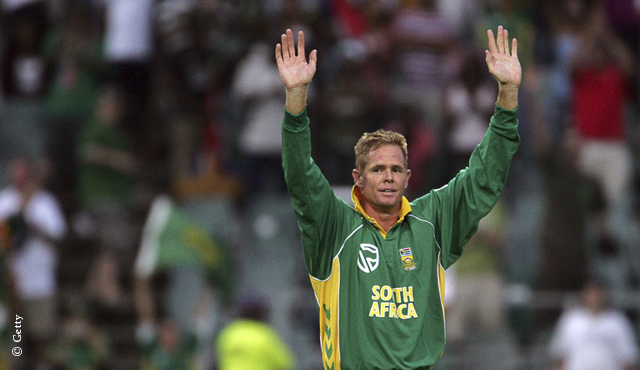
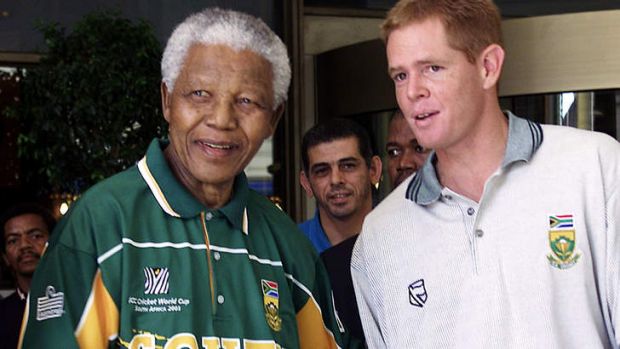
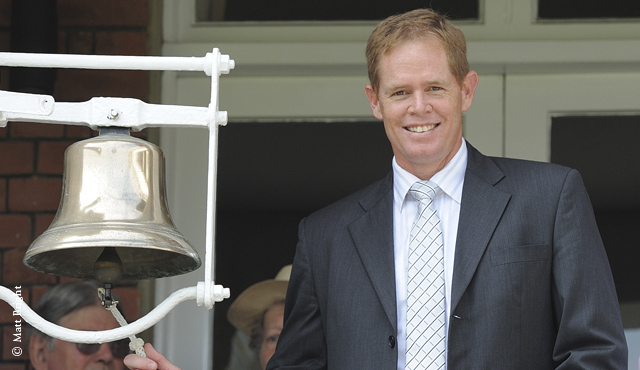
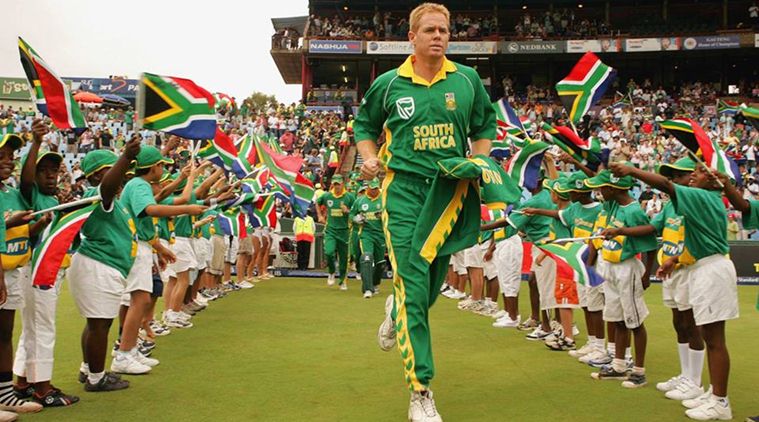
Only 24 days away, the Blue & Gold Cricket Luncheon will be headlined by South African legend, Shaun Pollock.

Pollock will join Adam Spencer's Expert Panel to discuss a range of topics including the current Australia vs South Africa test tour. 

The Blue & Gold Lunch sits right in between the Bellerive Test and the exciting Adelaide Day/Night Test.

For those who lived under a rock between his Test debut in 1995 and his retirement in 2008, Pollock played 108 Tests, taking 421 wickets at 23.11, and scoring 3781 runs at 32.31; played 303 ODI's, taking 393 wickets at 24.50, and scoring 3519 runs at 26.45; captained South Africa from 2000 - 2003; and was named Wisden's Cricketer of the Year in 2003.

The Blue & Gold Cricket Luncheon is on Friday 18th November at the Ivy Ballroom, The Ivy, 320 George Street, from 12.30pm.

Aside from the expert panel, we will also be inducting three members of Sydney University Cricket Club into the Virtual Hall of Fame. One is a legendary 19th century figure, whilst the other two were strong contributors on and off the field during the 80s and 90s. Find out tomorrow who these will be.

If you haven't already, book your tickets now by downloading and completing the booking form here.

Any tables booked before the end of October will go in the draw to win 12 bottles of Tyrrell's Lost Block Chardonnay.

All funds raised from this lunch go towards strengthening our coaching program, supporting our tours and providing scholarships to deserving student cricketers.

Recap: Round 4, Day 1

Recap: Round 4, Day 1

1st Grade:

Hawkesbury 8/404 (Clarke 162, Jamal 73 & McKay 56, Malone 4/130, May 2/42)

With Nick Larkin being called into the NSW Blues side for the Matador Cup Final against Queensland on Sunday, Greg Mail stepped up to lead Uni in the round four clash with Hawkesbury at Owen Earle Oval. 

Winning the toss and asking Hawkesbury to bat turned out to be a less than successful strategy, with early cloud cover quickly disappearing and the pitch flattening out rapidly. In form batsman Josh Clarke made the students rue missed chances, scoring his third successive century, his highest first grade score of 162, before Ashton May claimed him in final over of the day.

It was a tough day at the office for the Uni bowlers, with Devlin Malone again the standout, taking 4/130 off his 28 overs.  Ben Joy and May were the only other bowlers to make inroads into the Hawkesbury batting line up, taking 2/45 and 2/42 respectfully. 

The Uni boys will be hoping to wrap up the tail quickly before beginning the difficult chase of 400+. 

2nd Grade: 

Sydney Uni 273 (Miller 143, Crowley 56, Ridgewell 4/51, Brown 3/40) Hawkesbury 2/29 (J Holloway 1/0, Craig-Dobson 1/7)

After a relatively slow start to the year, 2nd grade returned home hoping to emulate 1st grades efforts last round.  Dave Miller wasted no time in winning the toss and batting on what looked like an absolute belter. 

After losing an early wicket, the Skipper and housemate James Crowley set about rebuilding the Uni innings with a 113-run second wicket stand. Crowley looked in sublime touch, working his way to a solid 56.  After losing Crowley, and what became a commonly occurring event throughout the innings, we lost our third soon after, before Ben Larkin joined Miller at the crease.

In typical fashion, Ben (17 off 78) was circumspect throughout his dig, allowing Miller to be the aggressor. These two enjoyed an 80-run partnership before Larkin departed with the score at 4- 233. 

When Miller followed soon after for an outstanding 143 off 174, our lower order capitulated, losing 6/21including a hat-trick to Harrison Ridgewell.

Despite the strong start, the Uni boys concluded their innings disappointed knowing they had left runs out in the middle.  With 14 overs left in the days play, a few wickets could win the day for Uni and a disciplined spell of bowling from all made it a difficult task for the Hawkesbury top order. Holloway and Craig-Dobson the lucky two who collected a wicket each to have Hawkesbury 2/29 at the close of play.

3rd Grade:

Sydney Uni: 200 (Kerr 62, Arnott 52, Litchfield 25, S Mott 7/61) Hawkesbury 2/49 (L McMahon 1/10, X Frawley 1/15)

Similar to 2nd grade, 3s have had a slow start to the year and headed out west determined to correct this.  Ash Cowan once again lost the toss and was sent into bat. 

Losing both openers for 2 and 0 wasn’t the ideal start, Litchfield and Kerr were tasked with rebuilding the innings against experienced first grade bowler Shane Mott.  Litchfield continued his reasonable start to the year looking solid for 25 before playing around a good delivery from Mott.  Ed Arnott joined Kerr at the crease and these two put on a much needed 100-run partnership, with Kerr (62) continuing his hot form.  Arnott eventually chipped one to short cover for 52, soon followed by Kerr, which began another mass exodus, before Gibson (27) and McMahon pushed the score up to 200.

With 29 overs still to play, a huge bowling effort was needed.  Again similar to second grade, all bowlers toiled hard and applied enormous pressure to the Hawkesbury batsman.  Tom Kierath bowled frugally going for only 5 runs off his 9 overs, before Lewis McMahon and Xavier Frawley took a wicket each to have Hawkesbury 2/47 at the end of the day.

4th Grade:

Hawkesbury 204 (Fogg 64, Myers 39, AJ Grant 4/27)

After missing the last two matches, skipper AJ Grant was a welcome inclusion for the round 4 clash.  Again looking to correct a slow start, fourth grade were determined to come out strongly, AJ lost the toss and was asked to bowl on a rock hard St Pauls wicket. 

A fairly consistent and relentless bowling effort had Hawkesbury at 7/122 before the tail wagged with a 50-run 8th wicket stand pushed the total up around 200 before Grant grant claimed the final wicket. 

Grant was the stand out on his return taking 4/27 from ten overs, well supported by Aiden Peek and Ryan Danne, 2/27 and 2/28 respectively. 

5th Grade:

Hawkesbury 38 (R Holcroft 4/14, A Wilkinson 2/6) Sydney Uni 7/203 (A Bell 30, J Morley 53)

Uni’s 5th grade had an outstanding day at Benson’s Lane. Similarly to 4s, they welcomed back regular skipper Mike Harris after he missed the first three rounds on wedding duties (Congratulations Mike). 

Uni’s bowlers decided to give Mike the best wedding present of all, dismissing Hawkesbury for 38. Ryan Holcroft was the chief destroyer, taking 4/14 off 10 and was ably supported by Andrew Wilkinson (2/6) and Natesh Yoganand (1/7). 

Despite losing an early wicket, the Uni boys passed the Hawkesbury total and proceeded to post a commanding 7/203 leading into day two.  Alex Bell (30) and Jarrod Morley (53) were the stand outs with the bat.

With a massive 165-run leading into day 2, the boys will be pushing hard for the ten points.

Metro Cup: Sydney University 334 (Gillespie 79, Frost 67 & Hughes 61, J Coutts 4/42)

After a tough few weeks, Metro similarly welcomed back regular skip, Andrew Wilkinson, and the boys responded well. 

Debutant Liam Hughes (61) made the most of his chance at the top of the order, combining with James Gillespie (79) in a 143-run opening stand.  The middle order saw a few starts without any notable performances until Brodie Frost walked to the crease.  Brodie, unable to bowl due to injury took his frustration out on the ball smoking 67 from 46 balls to help move the students total past 300 at the close of the day. 

The boys will be looking to continue this dominance next week and get back into the winners circle

Milestones Monday

Milestones Monday

During his 66 against Western Australia in the Matador BBQs Cup, Ed Cowan passed 1000 runs for New South Wales in List A matches.

Nick Larkin became the first player ever deployed as a concussion substitute under Cricket Australia’s new concussion rules.  Nick replaced Daniel Hughes, who retired hurt after being struck on the helmet by a delivery from Peter Siddle in the Elimination Final of the Matador BBQs Cup at Drummoyne Oval.  It was Nick’s first List A match for New South Wales, but not his List A debut: he played two matches for Ireland against Sri Lanka A in 2014.

Playing in only his 18th match (14 for Sutherland and four for Sydney University), Devlin Malone took his 50th wicket in First Grade when he dismissed Hawkesbury’s Ryan Mizzi.

David Miller’s captain’s innings of 143 against Hawkesbury was his first Second Grade century and his highest score for the Club.  His innings took him past Peter Gannon and Rob Crittenden on the Club’s list of all-time run-scorers, where he is now in 42nd place.

James Crowley’s 56 against Hawkesbury was his highest score in Second Grade.

Hayden Kerr, with 64 against Hawkesbury, hit his highest score in Third Grade.

Ed Arnott hit his fourth half-century in Third Grade.

AJ Grant, with 4-27 against Hawkesbury, claimed his best bowling figures in Fourth Grade.

Aidan Peek made his debut in Fourth Grade and took his first wickets in that grade.

Ryan Holcroft played a key role in demolishing Hawkesbury’s Fifth Grade for 38, returning his best figures for the Club (4-14).

Jarrod Morley scored his first half-century for the Club, reaching 53 in Fifth Grade against Hawkesbury.

For the second match in succession, James Gillespie improved his highest score for the Club, hitting 79 in Metropolitan Cup against Eastern Suburbs.

Liam Hughes made his debut for the Club, scoring 61, in Metropolitan Cup against Eastern Suburbs.

Three Students help NSW into the Final

Three Students help NSW into the Final

Three Sydney University players - Ed Cowan, Ryan Carters and Nick Larkin - helped New South Wales to a conclusive victory over Victoria in the Elimination Final of the Matador BBQs Cup at Drummoyne Oval last night.

University captain Nick Larkin entered the match in highly unusual circumstances.  When opener Daniel Hughes was struck on the helmet by a short-pitched delivery from Peter Siddle, he was ruled out of the match on medical advice after taking a concussion test.  Under Cricket Australia's new concussion rules, a concussed player may be replaced by another player of the same type, who has the right to take a full part in the game.   Larkin became the first player to substitute into a game under these rules when he was named to replace Hughes.

Hughes had shared an opening partnership of 41 with Ed Cowan before he was injured in the ninth over of the innings, with the Blues chasing Victoria's total of 242.  Cowan went on to add 104 for the second wicket with Nick Maddinson, putting NSW on track for victory.  By the time he gloved a ball from Scott Boland through to Matthew wade, he had hit 64 from 87 deliveries, with eight boundaries.  It was his fourth half-century of another highly successful Matador Cup campaign.

Larkin was able to bat under the new regulations, but rain ended play as he walked to the crease, with the Blues a long way ahead of their Duckworth?lewis target.

 New South Wales will now play Queensland in the final on Sunday.  Larkin remains with the Blues squad - his place in First Grade for today's match with Hawkesbury is taken by his brother James.