John Spence - Australia Day Honours' List

John Spence - Australia Day Honours' List

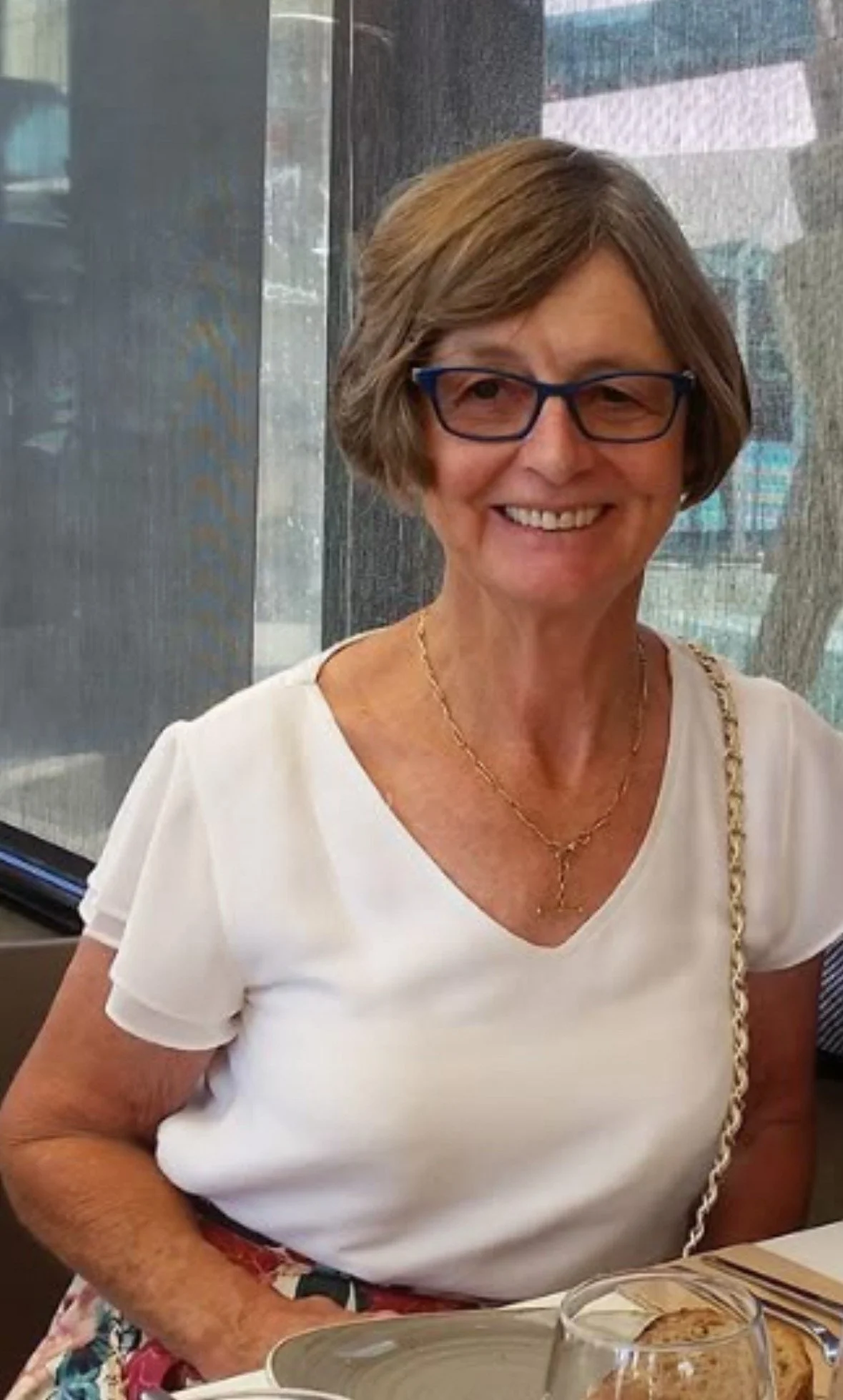
John Spence, former lower grade captain who worked tirelessly for the Club and for Sydney University Sport for many years in the 1960s and 1970s, has been awarded the OAM in the Australia Day Honours list. 

The Club is delighted for John and warmly congratulates him on this much deserved honour

James Rodgers 

Andrew Bell AC - Australia Day Honours' List

Andrew Bell AC - Australia Day Honours' List

In the Australia Day Honours’ List, The Honourable Chief Justice Andrew Bell was awarded the Companion of the Order of Australia  “for eminent service to the judiciary and to the law…And to the arts as an administrator and benefactor.”

Andrew Bell played for the Club in the 1980s and has continued his interest in and support for the Club. 

The Sydney University Cricket Club is delighted to acknowledge this most significant award. 

James Rodgers

Alan Manzie RIP

Alan Manzie RIP

The Club has been informed of former SUCC player Alan Manzie’s passing.

A comprehensive obituary will be added to the website and included in the 2025/26 Annual Report.

Memories of the 1950s

Memories of the 1950s

Neil Bonnell turned 90 in May 2025. He reflects on his years with SUCC.

As a now officially venerable ex-member of the Sydney University Cricket Club, I thought that it was time that I reflected on my experiences of the 1950s.

This was not a period of significant achievement for the Sydney University Cricket Club. There were occasional bright spots, but problems faced by the club included not being able to attract gifted players who were eligible to play for the club, but who chose district clubs instead.  Also, we were not able to keep the original teams together over the summer break.


I spent my time in the thirds, fourths and Poidevin-Gray sides. The 4ths suffered most as the College men tended to return to their country homes for the summer.  Vacancies in higher teams were filled from the 4ths and vacancies in the 4ths from wherever they could be found.  In the 1954-55 season 36 players represented the 4ths.  That season provided me with both my worst and best experiences as a batsman.  In late November or early December, I scored a golden duck in the first innings and what I believe is a diamond duck in the second.  In the first innings, I played forward to an outswinger, which I missed by a clear margin.  The bowler gave one of those strangled cries which expressed frustration at such a close shave.  To everyone’s surprise, the umpire (a Dutchman wearing sunglasses) raised his finger.  I hoped for better things in the second innings.  I walked out to the bowler’s end hopeful of better luck that time.  On the first ball, the striker called for a run, then changed his mind when I was halfway down the pitch. My score: run out 0.  Barely a month later, at North Sydney No 2. I scored something like 33 out of 88 and 51 out 155.  487 runs were scored on the day, but we lost outright.


I selected as a wicketkeeper who was expected to make a few runs from time to time.  One of my most valuable innings was the Poidevin-Gray match in which I kept my wicket intact long enough for Col Pearson to reach his century.   One of my most embarrassing moments came in a Poidevin-Gray match played against Marrickville on New Year’s Day.  Bowling first, Dave Walker struck the opening batman’s pads with his first four balls.  I appealed loudly and unsuccessfully for LBW each time. Even my teammates began to suggest that I keep quiet.  Fortunately, Dave changed his angle and achieved a snick, which I caught. 1 for 0 quickly became 5-24.  The tail-enders, having had more time to recover from their New Year’s Eve celebrations, put up more resistance, but with that start we won comfortably.


I began the 1955-56 season as Vice-captain of the Thirds, but half-way through the season, moved into the captaincy after Geoff Wilkin withdrew because of injury The most disappointing match on my watch was a one-day fixture played against Randwick at Kensington Oval, Sent in to bat on a damp wicket, we folded for 49.  I decided that only by attack could we hold Randwick to a reasonable score.  The field was set accordingly and I stood up to the stumps for all bowlers.  The fieldsmen did their job by holding all their catches. This enabled us to reduce our opposition to 9-40, but the score crept up to 9- 45. At that critical moment, I failed to take a ball which our medium pace bowler pushed outside the leg stump. Four byes levelled the scores, after which the last pair scraped together another ten runs.  Somehow, we managed to lose outright.


One of the tactics used by the Committee of the day to deal with the problem of the excessive turnover of players was the formation of the Fourteen Club.  All players who played all fourteen matches of the season would be admitted to this elite group. Without attractive rewards this scheme failed to have any impact.  In one season, for example, John Lamble and I were the only fourth graders to win admission to the 14 Club. 


As a result of pressure applied to the College men to play the whole season, they stacked an Annual General Meeting and managed to win most of the slots available.  It didn’t take for them to discover the amount of work required to run a grade cricket club and, one by one, they quietly resigned. 


Of the many interesting personalities in the club at this time, a few stand out.  Peter Hall, perhaps the most stylish batsman of this period, went on to supervise the completion of the Sydney Opera House.  Donald Scott-Orr must have been the longest-serving member of the club, due to his taking twelve years to complete his medical degree.  In his early student days he signed off a letter to Honi Soit as Medicine I, Cricket IV.  In his best season (1956-57), he scored 550 runs at 30.6 and took 41 wickets at 15.7. I mention Eric Stockdale only because he would sign up for any match on the club calendar.  He was surely the oldest player ever to feature in a Poidevin-Gray side.  It is probably just as well that we didn’t make the finals while he was a team member. He wore a cap only because his hair had started to thin out.


John Morris, Captain retired, Indian Army, was something of an oddity – but no one was a more ardent supporter of the club than he. When I joined SUCC, “Skip” as he was known was a benefactor as well as the scorer for the Firsts.  He then succeeded Ossie Stenmark as President of the club.  A somewhat conservative figure, Skip did not understand undergraduate humour. Prior to one committee meeting the members arranged for a motion allowing the admission of female players to inter-faculty games.  The discussion became quite vigorous, but even when it became obvious that the discussion was aimed at humour rather than substance, Skip took the whole farrago seriously and with the weight of responsibility on his shoulders, used his casting vote to deny the motion. As the committee members came to realise that they had not been fair to Skip, nothing similar was ever attempted.


My cricketing adventures after graduation took me to a cow pasture at Nana Glen (with the obvious hazards for fieldsmen), to the NSW Teachers Cricket Club in Sydney, minor League cricket in Lancashire, village cricket in Great Brickhill, several seasons with the Kampala Wanderers in Uganda (interrupted briefly by each of two coups), one astonishing match for Cricket Club of India at Brabourne Stadium during a war between India and Pakistan, social cricket with a Trinity Grammar (NSW) staff team and finally with I Zingari in Warwick, Qld.  It all ended at the age of 62, when I could no longer keep wickets effectively and had sunk to number ten in the batting order.


Victoria Mail - RIP

Victoria Mail - RIP

It is with great sadness that the Sydney University Cricket Club has received the news of Victoria Mail's passing on the 8th December.

Victoria, was a loving mother to Greg and Kylie, partner to Geoff, a mother-in-law to Mel and Maurie and also a proud grandmother to Henry, Jonathon and Victoria. She was a dedicated and loyal supporter of the Club at matches and events during Greg’s 1st Grade career from 2004 to 2017.

The Club extends its sincere sympathies to Greg and the entire family during this difficult time.

Ian Fisher - RIP

Ian Fisher - RIP

IAN ELLIS FISHER

5th May, 1939-25th August 2025

As an engineering graduate in 1957, Ian Fisher attended Sydney University’s pre season cricket training. Ian had an imposing record in junior cricket in Grafton and abundant natural athletic ability. However the university selectors failed to recognise the potential and he was not graded.

And so, for over a decade Ian’s cricket career blossomed elsewhere, largely at the Glebe and Sydney Clubs where he captained first grade for three seasons. He became highly respected in the Grade competition as an aggressive left hand batsman.

For the 1969-70 season, Sydney University Cricket Club was searching for a first grade captain and Ian accepted the invitation to become first grade captain, giving him the most influential on-field position in the Club. He immediately brought a renewed sense of purpose and direction to Sydney University cricket.

In addition to leading first grade, he took a keen interest in other grades with support to all lower grade captains.

In successive seasons on uncovered pitches Fish hit 851, 713, 537 and 539 runs. He became (for a time) the Club’s greatest run scorer in first grade and in Sydney Grade Cricket he scored 6,731 runs at an average of 31.6 with 13 centuries. His centuries for Sydney University often came when most needed. Against Randwick in 1973 his 119 not out included 97 in even time after lunch and his 100 not out in 1974 was against a Northern District attack that included 3 State players and was made in even time. His second 50 required only 17 balls.

Despite his First Grade success, the NSW selectors never called upon him, a mystifying denial of his ability and potential. It is ironic that he later served as a NSW selector for 5 years after his retirement from playing, contributing to the strength of the State side.

The umpires seemed to regard his talents more highly as in 1970-71, he was runner up in the Sydney Morning Herald player of the year, voted by umpires and in the next season, he finished third.

Whether as captain or administrator, Ian Fisher was often opinionated but always worth listening to.

It would have been fitting if he had led University’s First Grade into semi-finals. Twice he came close, claiming 5th place.

When the Club was threatened with demotion from the Sydney Grade Competition in 1997, Ian Fisher was at his uncompromising best, When the Club most needed him, he returned to play a dominant part in its retention and in the resurgence of playing success. He continued uncompromising committee support and as Chairman of Selectors and coaching the Club’s first Green Shield side.

Ian Fisher is undoubtedly one of the most outstanding cricketers to have played for Sydney University Cricket Club.

 Ian Fisher’s other sporting love was tennis which he played throughout his life.

Ian Foulsham

Bert Alderson RIP

Bert Alderson RIP

The Club is saddened to hear of the death of former 1st Grade captain, Bert Alderson who died on 30 November, aged 100. 

Mr Alderson scored over 10 000 runs in 1st Grade for his two clubs, Sydney University and Cumberland (Parramatta). 

At the time of his death, he was the oldest former Sydney University Cricket Club player. 

James Rodgers


A tribute from Mike Pawley OAM, former NSW, Manly and Sydney University player:

“Bert was of a different generation to today’s grade cricketers.   I am sure all of you will agree, he had a very significant influence on all of our lives.

A gentleman cricketer. Terrific fielder. Inspiring mentor. Terrific batsman square of the wicket.  Outlived many if not all of his contemporaries. Averaged 100 in one grade season. Never judged any of our insane intervarsity behaviour.     

A very kind hearted GENTLEMAN.”       

Albert Henry Alderson (1924-2025)

Bert Alderson, who died at Lismore Base Hospital on 30 November 2025, two weeks short of his 101st birthday, was one of the most relentlessly prolific batsmen in the history of the Sydney grade competition.  Between 1939 and 1974, he scored over 14,000 runs in all grades, with 10,731 (at an average of 31.10) in First Grade.  Only 19 batsmen have scored more First Grade runs. 

Alderson was studying at Parramatta High School when he was selected in AW Green Shield by Central Cumberland (as the Parramatta club was then known) in 1939-40.  He made an immediate impression, scoring 29, 20, 12 and 87 not out in his four innings.  He was not quite 17 when, at the end of October 1941, he was promoted to First Grade to play against Balmain at Parramatta Oval.  He scored only 5 in his first innings, but in his next match, against Glebe, although he made no more than 22, the Daily Mirror thought that he “showed more initiative than any other Cumberland bat” and “repeatedly drove and cut with delightful freedom”.  In January 1942, he hit his first half-century, 69 in 50 minutes against Manly.  Soon he was firmly established in the First Grade side.

A well-organised left hander with a wide range of strokes, Alderson is often named as one of the best Sydney batsmen never to play for New South Wales.  But he did play for New South Wales twice, alongside Sid Barnes and Bill O’Reilly, opening the batting in a pair of two-day wartime matches against Australian Services.  In the first, he was dismissed by Ray Lindwall and Colin McCool for 0 and 11 and in the second he fell to McCool again, for 16.  At the age of twenty, he could reasonably have expected to play more representative cricket, but at that stage of his career he was an opener, and after the war his path was blocked by Sid Barnes and Arthur Morris.

Five times between 1942-43 and 1949-50, Alderson passed 500 runs in a season, when that was by no means a common feat.  He was also a lively fieldsman, who often kept wicket early in his career.  He was consistently successful for Cumberland, but not invariably: in March 1947, he was (together with Lou and Richie Benaud) in the First Grade side that was dismissed for 42 and 31 by Manly’s left-armer Alan Walker, who took 7-8 and 7-6.  Richie Benaud later recalled that, at his family home at Northmead, Bert had a concrete pitch covered with matting, where Alderson and Benaud often practised. 

By reason of his studies (a diploma in Town Planning), Bert was qualified to play for Sydney University, and he joined the club for the 1951-52 season (alongside his brother Ken, who enrolled in the same course).  Chasing 243 for victory at Waitara Oval, Alderson shared an opening stand of 158 in 103 minutes with Phil Greville, on his way to 139 (in 193 minutes, with 20 fours).  He also made a “brilliant, chanceless” 100 against North Sydney and against Glebe his 114 occupied only 132 minutes.  He finished the season with 631 runs at 45, and he followed with 625 runs the next season.  His studies complete, he returned to Cumberland, where he captained the First Grade side in 1956-57 and 1957-58. 

In 1961-62, Alderson returned to the Sydney University club, under a dispensation that allowed the club to field a graduate as captain.  He began the season in extraordinary form, hitting 281 runs before he was dismissed – 104 not out against Northern District, 69 not out against Gordon, 67 not out against North Sydney and 41 against Paddington.  He was dismissed only five times all season, finishing with 514 runs at 102.80.  For five seasons, he provided his teams of undergraduates with thoughtful, encouraging leadership, helping in the development of young players like Mike Pawley.  Altogether for Sydney University he scored 2991 runs at an average of 43.98 – which was, by the low-scoring standards of the days of uncovered pitches, exceptional.

Alderson then played out his career with Central Cumberland, for whom he finished with 11,016 runs at 31.21 (7740 at 28.04 in First Grade).  He was club President in 1969-70, when Central Cumberland won its first club championship.  His sons Doug and Greg both reached First Grade at Central Cumberland, and the grandstand at Merrylands Oval was named the Bert Alderson Stand.

“Bert’s cricket career was extraordinary”, Mike Pawley has said.  “Things other than cricket must have clouded the State selectors’ judgment.  Who knows why?  But I think Bert Alderson, the person, was even more impressive than Bert Alderson the cricketer.  Did he ever make an enemy on the cricket field?  I am certain not.  Did he ever sledge?  Of course not.  Bert had a significant influence on the life of every sports person he had contact with.”

In the winter, he was an excellent baseballer, appearing for NSW Schoolboys in 1939 and 1940, before representing New South Wales against Victoria in Claxton Shield trials in 1947, 1948, and 1949.  Eventually, he was chosen for New South Wales in the Claxton Shield tournaments in Adelaide in 1961, and Perth in 1962.  He played club baseball for Waverley, Western Suburbs, and Sydney University, and was named in University’s “Team of the Century.”

Professionally, Bert worked as Municipal Engineer and Chief Town Planner of Holroyd Council for 37 years.

The club salutes a remarkable life and extends its sympathies to the Alderson family.